Contextual advertising for selling CS:GO cases (grey segment)
Contextual Advertising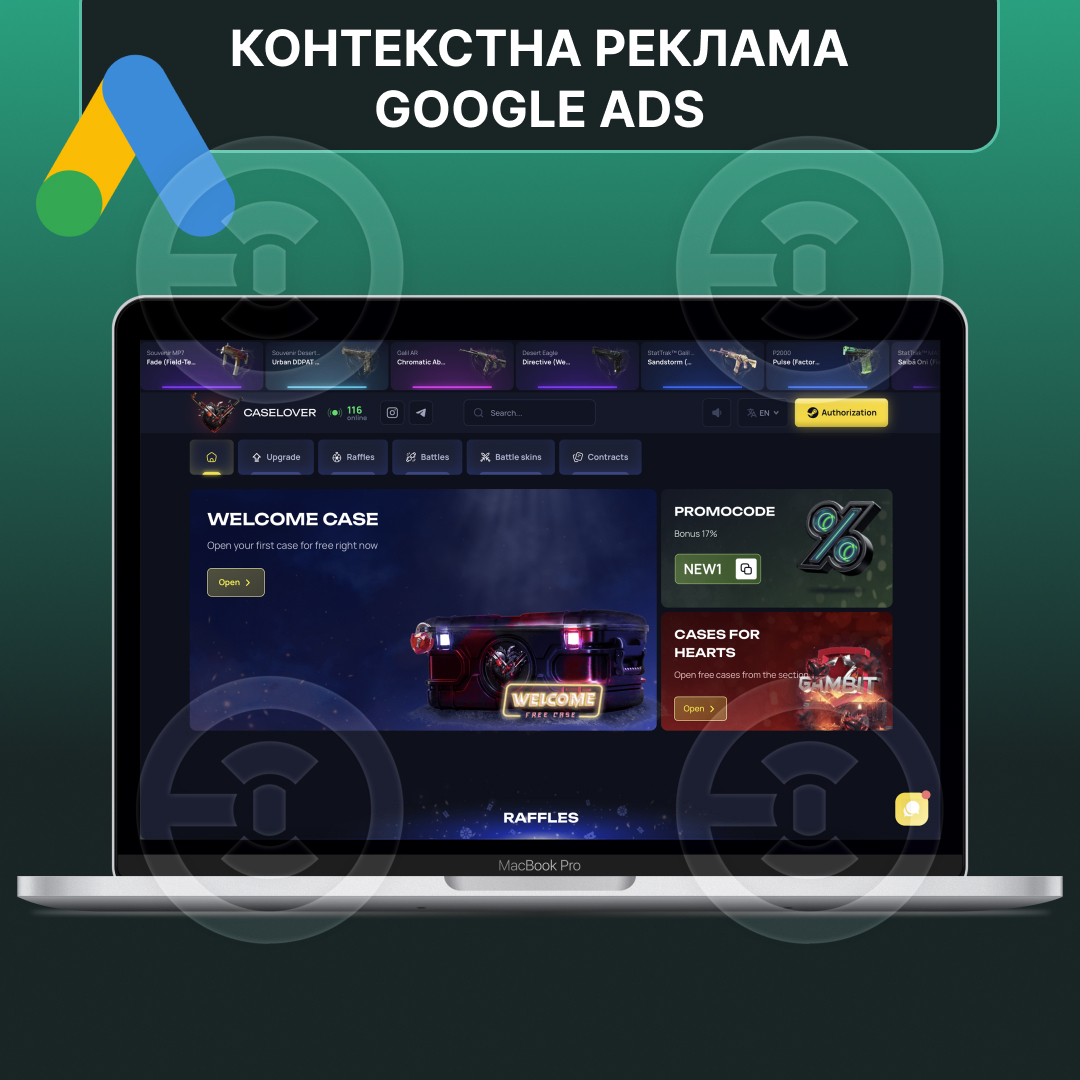
Contextual advertising for selling CS:GO cases (grey market segment)
About the project:
A website for selling and opening cases with skins for the game Counter-Strike: Global Offensive. The topic falls under regulation due to its similarity to gambling, which significantly complicates the launch of contextual advertising.
Problems:
1. Google Ads prohibits gambling advertising without proper licenses.
2. Moderation algorithms easily detect keywords related to skins, cases, or gambling.
3. High risk of account blocking due to lack of legal confirmation of activity.
Actions:
1. Cloaking:
- Created a "white" site for moderators that promotes a blog about video games with guides and reviews of CS:GO.
- For real users, a full commercial site with cases and the ability to open skins was available.
2. Searching for alternative platforms:
- Launched test campaigns on Google Ads, but focused mainly on other platforms such as TikTok Ads and Telegram, where moderation is less strict.
3. Masking queries:
- Used less obvious keywords, for example: "gift cases for gamers," "surprises for CS lovers."
- Avoided mentioning "CS:GO" in ad texts and used abbreviations or alternative terms.
4. Audience segmentation:
- Targeted gamers, especially those aged 18–30 interested in video games and streaming platforms (Twitch, YouTube).
5. Account rotation:
- Used new accounts every 2–3 weeks to avoid permanent bans.
Results:
- CTR: average indicator — 5.8%, as campaigns targeted a narrow audience.
- Average profit: $4.5 profit from each dollar invested.
- Achieved a stable flow of visitors amounting to 10,000 per month from combined platforms.
Conclusions:
Advertising in grey areas such as CS:GO cases requires an unconventional approach to ad copy, website design, and the use of alternative advertising platforms. Bypassing moderation and technical methods like cloaking are key elements of a successful campaign.
About the project:
A website for selling and opening cases with skins for the game Counter-Strike: Global Offensive. The topic falls under regulation due to its similarity to gambling, which significantly complicates the launch of contextual advertising.
Problems:
1. Google Ads prohibits gambling advertising without proper licenses.
2. Moderation algorithms easily detect keywords related to skins, cases, or gambling.
3. High risk of account blocking due to lack of legal confirmation of activity.
Actions:
1. Cloaking:
- Created a "white" site for moderators that promotes a blog about video games with guides and reviews of CS:GO.
- For real users, a full commercial site with cases and the ability to open skins was available.
2. Searching for alternative platforms:
- Launched test campaigns on Google Ads, but focused mainly on other platforms such as TikTok Ads and Telegram, where moderation is less strict.
3. Masking queries:
- Used less obvious keywords, for example: "gift cases for gamers," "surprises for CS lovers."
- Avoided mentioning "CS:GO" in ad texts and used abbreviations or alternative terms.
4. Audience segmentation:
- Targeted gamers, especially those aged 18–30 interested in video games and streaming platforms (Twitch, YouTube).
5. Account rotation:
- Used new accounts every 2–3 weeks to avoid permanent bans.
Results:
- CTR: average indicator — 5.8%, as campaigns targeted a narrow audience.
- Average profit: $4.5 profit from each dollar invested.
- Achieved a stable flow of visitors amounting to 10,000 per month from combined platforms.
Conclusions:
Advertising in grey areas such as CS:GO cases requires an unconventional approach to ad copy, website design, and the use of alternative advertising platforms. Bypassing moderation and technical methods like cloaking are key elements of a successful campaign.