Genesis Game — browser-based interactive gaming platform
Web Programming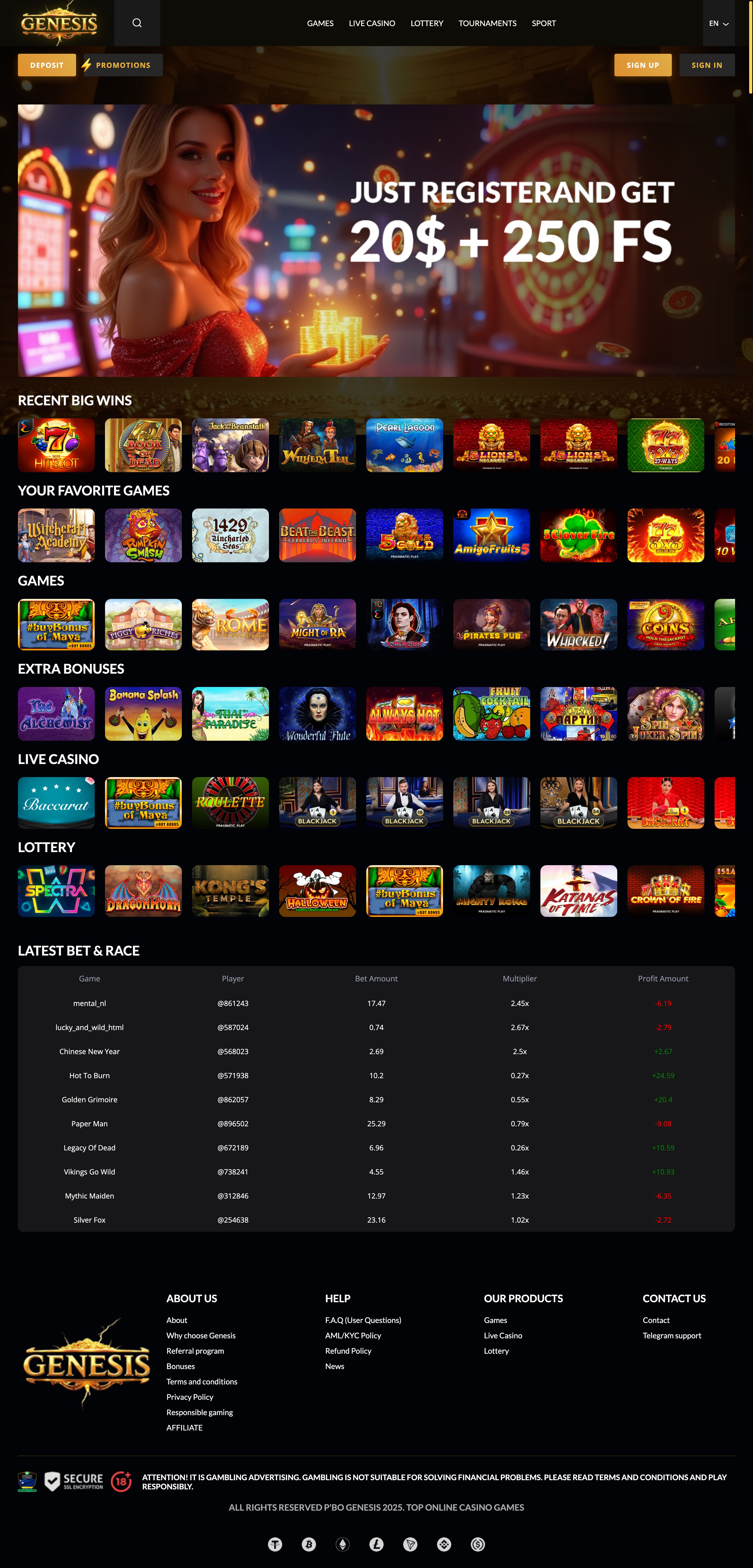
Genesis Game is a browser-based interactive gaming platform aimed at creating a fast, engaging, and visually appealing gaming experience directly in the browser.
At the core of the project is a combination of real-time interaction, modern frontend architecture, and performance optimization, which allows for a smooth gaming process without the need for installation or the use of resource-intensive clients.
From a technical perspective, the platform focuses on:
• High-performance rendering using modern browser capabilities (Canvas/Web APIs)
• Adaptive and responsive UI that ensures a stable experience across different devices
• Scalable frontend architecture ready for expanding gaming mechanics
• Resource loading optimization that reduces latency and speeds up startup
• State management and real-time updates, critical for interactive gameplay
The project also demonstrates a strong emphasis on user experience, including smooth animations, intuitive controls, and a clean interface that minimizes barriers between the player and the game.
My role in the project:
I designed and implemented a scalable frontend architecture optimized for real-time interaction and high performance.
Key focuses:
• Building an extensible architecture that allows for adding new gaming mechanics without rewriting the core
• Ensuring low-latency interaction, critical for gameplay
• Utilizing performance optimization techniques (lazy loading, rendering optimization, efficient state management)
• Developing a modular UI system to support scalability and maintainability of the code
The main challenge was balancing between a rich interactive experience and the performance limitations of the browser, especially on different types of devices.
At the core of the project is a combination of real-time interaction, modern frontend architecture, and performance optimization, which allows for a smooth gaming process without the need for installation or the use of resource-intensive clients.
From a technical perspective, the platform focuses on:
• High-performance rendering using modern browser capabilities (Canvas/Web APIs)
• Adaptive and responsive UI that ensures a stable experience across different devices
• Scalable frontend architecture ready for expanding gaming mechanics
• Resource loading optimization that reduces latency and speeds up startup
• State management and real-time updates, critical for interactive gameplay
The project also demonstrates a strong emphasis on user experience, including smooth animations, intuitive controls, and a clean interface that minimizes barriers between the player and the game.
My role in the project:
I designed and implemented a scalable frontend architecture optimized for real-time interaction and high performance.
Key focuses:
• Building an extensible architecture that allows for adding new gaming mechanics without rewriting the core
• Ensuring low-latency interaction, critical for gameplay
• Utilizing performance optimization techniques (lazy loading, rendering optimization, efficient state management)
• Developing a modular UI system to support scalability and maintainability of the code
The main challenge was balancing between a rich interactive experience and the performance limitations of the browser, especially on different types of devices.