Layout of the tour operator's website
HTML & CSS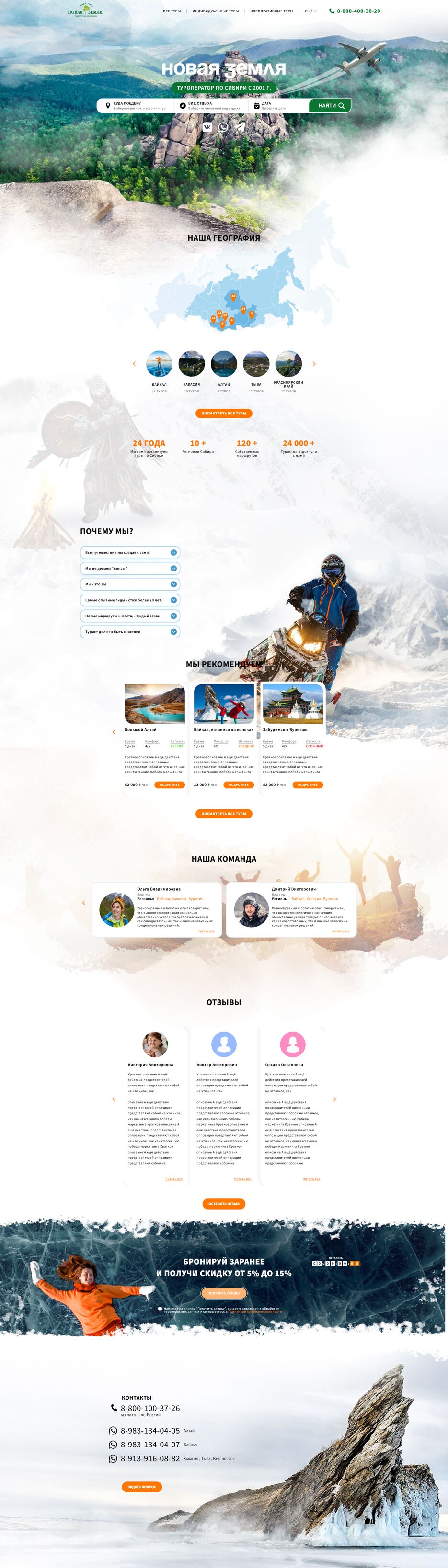
I performed the layout for a tour operator's website as a contractor in a developer team responsible for full integration and backend logic. The work was carried out directly in the provided project using the Astro framework and additional internal settings. I fully adapted to the project structure, adhered to all coding rules, and assembled the layout in the form of modules ready for integration.
What was done:
1. Component-based layout by sections:
- created separate modules for header, footer, typical blocks, and content sections;
- implemented a responsive version for all screen resolutions;
- assembled the main page and tour catalog from typical components.
2. Interactive map with geo markers:
- created an interactive map based on a static image with precisely positioned markers;
- ensured proper scaling — markers did not "shift" on different screens;
- implemented popups with information that open on click.
3. Typical tour cards:
- developed a universal card component with various modifiers;
- prepared a class system for quick catalog expansion.
4. Client-side filters ready for backend integration:
- implemented filtering logic in JS (client-side);
- prepared a structure with correct IDs, dataset, and semantics for seamless backend connection;
- created custom range sliders and control elements.
Result:
The website received a clean, component-based, and scalable frontend structure that the developer could easily integrate into the server side. All interactive elements — map, filters, selects — work stably and quickly on any device.
What was done:
1. Component-based layout by sections:
- created separate modules for header, footer, typical blocks, and content sections;
- implemented a responsive version for all screen resolutions;
- assembled the main page and tour catalog from typical components.
2. Interactive map with geo markers:
- created an interactive map based on a static image with precisely positioned markers;
- ensured proper scaling — markers did not "shift" on different screens;
- implemented popups with information that open on click.
3. Typical tour cards:
- developed a universal card component with various modifiers;
- prepared a class system for quick catalog expansion.
4. Client-side filters ready for backend integration:
- implemented filtering logic in JS (client-side);
- prepared a structure with correct IDs, dataset, and semantics for seamless backend connection;
- created custom range sliders and control elements.
Result:
The website received a clean, component-based, and scalable frontend structure that the developer could easily integrate into the server side. All interactive elements — map, filters, selects — work stably and quickly on any device.