Preview
Emotional Center
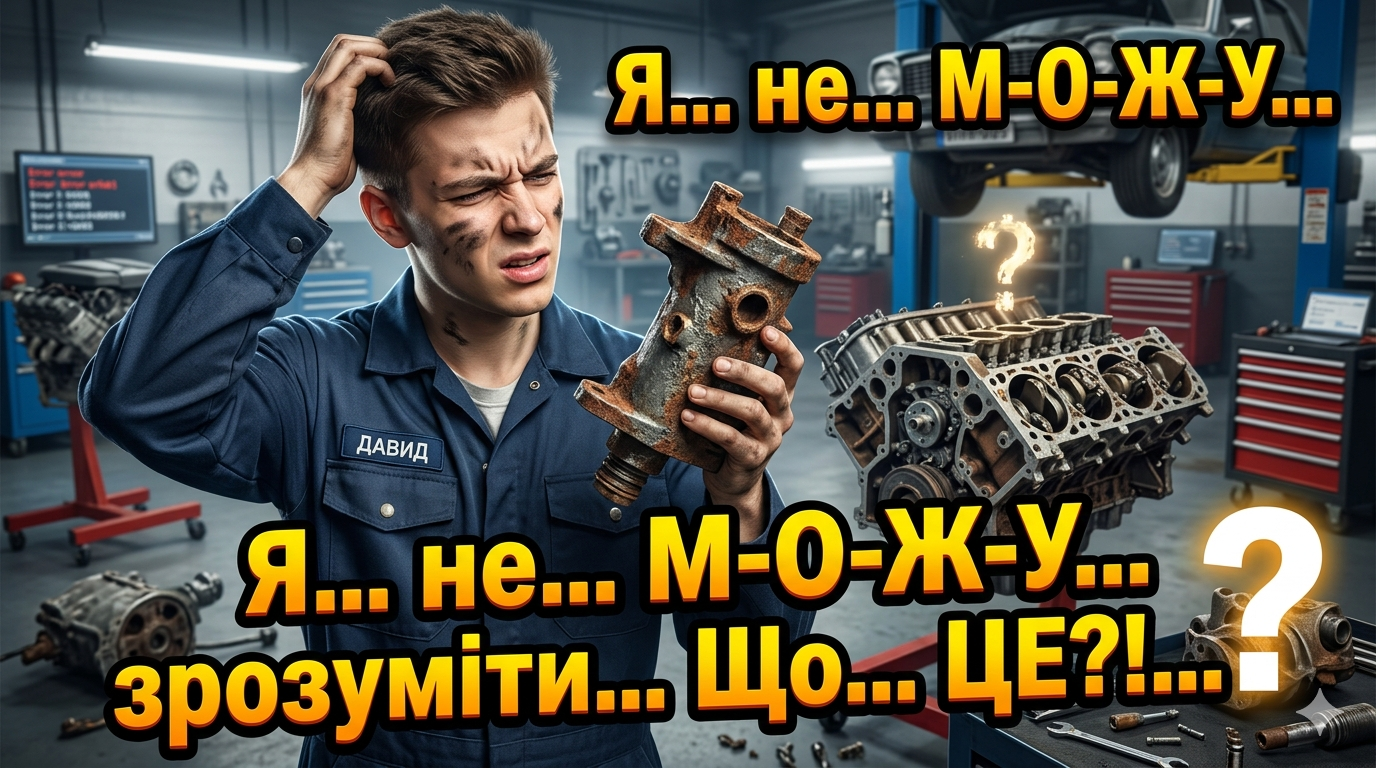
* Character (David): The main focus is on the face of the mechanic. An expression of complete confusion, squinting eyes, and a hand scratching the back of the head perfectly convey the state of "stuck." Dirt on the face adds authenticity — we believe he really works in a garage.
* Detail in hand: A rusty, old part of unusual shape becomes the main object of interest. The viewer involuntarily begins to solve this "quest" along with you.
2. Background and Atmosphere
* Garage/Workshop: The background is rich in details: a disassembled engine, tools, a car lifted on a hoist. This creates the right context — the viewer immediately understands what the video is about.
* Technical details: A monitor with error codes on the left and disassembled cylinder blocks add professionalism. Everything looks very realistic.
3. Textual Accents (your signature style)
Text occupies a significant part of the frame, which is good for small phone screens:
* "I... can't...": Large spacing between letters and ellipses imitate heavy breathing or shock. This creates a dramatic effect.
* "understand... What... IS THIS?!...": Yellow color against the blue overalls creates maximum contrast. A huge white question mark in the corner is the final accent that "shouts" about the mystery.
4. Visual Techniques (Clickbait)
* Color contrast: The dark blue clothing of the mechanic contrasts with the bright yellow text. This is a classic color pair that is best perceived by the eye.
* Intrigue: The preview does not provide answers; it poses questions. This is the "golden rule" of YouTube: the viewer must click to find out what this part is and why the mechanic cannot understand it.
* Branding: The inscription "DAVID" on the patch of the overalls is a very cool detail for character recognition.
* Character (David): The main focus is on the face of the mechanic. An expression of complete confusion, squinting eyes, and a hand scratching the back of the head perfectly convey the state of "stuck." Dirt on the face adds authenticity — we believe he really works in a garage.
* Detail in hand: A rusty, old part of unusual shape becomes the main object of interest. The viewer involuntarily begins to solve this "quest" along with you.
2. Background and Atmosphere
* Garage/Workshop: The background is rich in details: a disassembled engine, tools, a car lifted on a hoist. This creates the right context — the viewer immediately understands what the video is about.
* Technical details: A monitor with error codes on the left and disassembled cylinder blocks add professionalism. Everything looks very realistic.
3. Textual Accents (your signature style)
Text occupies a significant part of the frame, which is good for small phone screens:
* "I... can't...": Large spacing between letters and ellipses imitate heavy breathing or shock. This creates a dramatic effect.
* "understand... What... IS THIS?!...": Yellow color against the blue overalls creates maximum contrast. A huge white question mark in the corner is the final accent that "shouts" about the mystery.
4. Visual Techniques (Clickbait)
* Color contrast: The dark blue clothing of the mechanic contrasts with the bright yellow text. This is a classic color pair that is best perceived by the eye.
* Intrigue: The preview does not provide answers; it poses questions. This is the "golden rule" of YouTube: the viewer must click to find out what this part is and why the mechanic cannot understand it.
* Branding: The inscription "DAVID" on the patch of the overalls is a very cool detail for character recognition.

 Vinnytsia
  A little busy