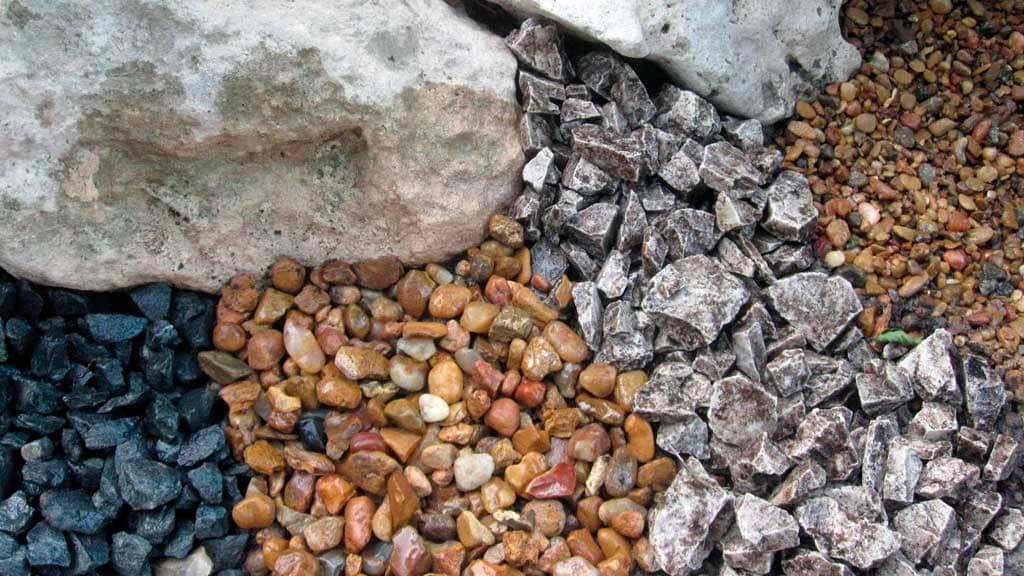
Gravel for drainage – choosing the filler for the system.
It often happens that in certain areas, especially in depressions in the ground, one can see a peculiar puddle, standing water that does not absorb. Most likely, the soil there is very clayey and groundwater is located nearby. If such a problem exists on a household plot, there must be a struggle against increased soil moisture. Otherwise, harmful, destructive effects such as cracks in paving slabs, foundation deformation, swampiness, and basement flooding cannot be avoided.
To prevent such inconveniences, it is necessary to create soil drainage. For example, it is essential to protect the house from basement flooding. To do this, a trench should be dug around the house, a layer of sand about 5-7 cm thick should be laid at the bottom, followed by washed gravel. After this, a pipe drainage system with gravel or crushed stone as the filler is installed. Excess underground moisture will enter through the joints and openings into the receiving pipes. Next, the layer of gravel is covered with fabric geotextile. The trench is backfilled and leveled. All excess underground moisture will drain into special wells located at the lower part of the terrain plan. This water can be used for irrigation.
As can be seen, gravel serves as the filler. There are several types of it, and by studying the characteristics of each, you can choose the most suitable option for yourself.
• Gravel gravel is characterized by low cost, relatively low strength, and low radioactivity. A good option for drainage purposes. It has sharp edges that better retain dirt. It should be laid tightly. There are two types of gravel: crushed mechanically (rock) and natural (pebbles, gravel).
• Granite type is more expensive but more durable (service life up to 40 years). It has good frost resistance and strength. It is used for the production of reinforced concrete structures with increased strength requirements. The radioactive background of this gravel is somewhat higher, so specialists recommend choosing first-class material with less than 370 Bq/kg of radioactivity.
• Dolomite (limestone) type is recommended for use in dry soils with low acidity. It is extracted from sedimentary rock, and its chemical composition is similar to the formula of chalk. This gravel is characterized by ecological purity, free from harmful impurities, and is non-radioactive. It is often used for landscape design.
• Porphyry is resistant to acidic environments, wear-resistant, fine-grained, and resembles andesite in its qualities.
• Secondary is a cheap option, as it is made from construction waste. Residues (except for metal) are crushed and reused.
Gravel comes in five fractions from 5 to 300 mm. For drainage needs, fractions 3 and 4 are most suitable. It is also divided into three categories: cubical, improved, and ordinary, and is measured by the number of needles in the material. The fewer there are, the wider the application. Coarse construction material is cheaper than fine.
It often happens that in certain areas, especially in depressions in the ground, one can see a peculiar puddle, standing water that does not absorb. Most likely, the soil there is very clayey and groundwater is located nearby. If such a problem exists on a household plot, there must be a struggle against increased soil moisture. Otherwise, harmful, destructive effects such as cracks in paving slabs, foundation deformation, swampiness, and basement flooding cannot be avoided.
To prevent such inconveniences, it is necessary to create soil drainage. For example, it is essential to protect the house from basement flooding. To do this, a trench should be dug around the house, a layer of sand about 5-7 cm thick should be laid at the bottom, followed by washed gravel. After this, a pipe drainage system with gravel or crushed stone as the filler is installed. Excess underground moisture will enter through the joints and openings into the receiving pipes. Next, the layer of gravel is covered with fabric geotextile. The trench is backfilled and leveled. All excess underground moisture will drain into special wells located at the lower part of the terrain plan. This water can be used for irrigation.
As can be seen, gravel serves as the filler. There are several types of it, and by studying the characteristics of each, you can choose the most suitable option for yourself.
• Gravel gravel is characterized by low cost, relatively low strength, and low radioactivity. A good option for drainage purposes. It has sharp edges that better retain dirt. It should be laid tightly. There are two types of gravel: crushed mechanically (rock) and natural (pebbles, gravel).
• Granite type is more expensive but more durable (service life up to 40 years). It has good frost resistance and strength. It is used for the production of reinforced concrete structures with increased strength requirements. The radioactive background of this gravel is somewhat higher, so specialists recommend choosing first-class material with less than 370 Bq/kg of radioactivity.
• Dolomite (limestone) type is recommended for use in dry soils with low acidity. It is extracted from sedimentary rock, and its chemical composition is similar to the formula of chalk. This gravel is characterized by ecological purity, free from harmful impurities, and is non-radioactive. It is often used for landscape design.
• Porphyry is resistant to acidic environments, wear-resistant, fine-grained, and resembles andesite in its qualities.
• Secondary is a cheap option, as it is made from construction waste. Residues (except for metal) are crushed and reused.
Gravel comes in five fractions from 5 to 300 mm. For drainage needs, fractions 3 and 4 are most suitable. It is also divided into three categories: cubical, improved, and ordinary, and is measured by the number of needles in the material. The fewer there are, the wider the application. Coarse construction material is cheaper than fine.