Step by step: together to success Practical guide for support
Tuition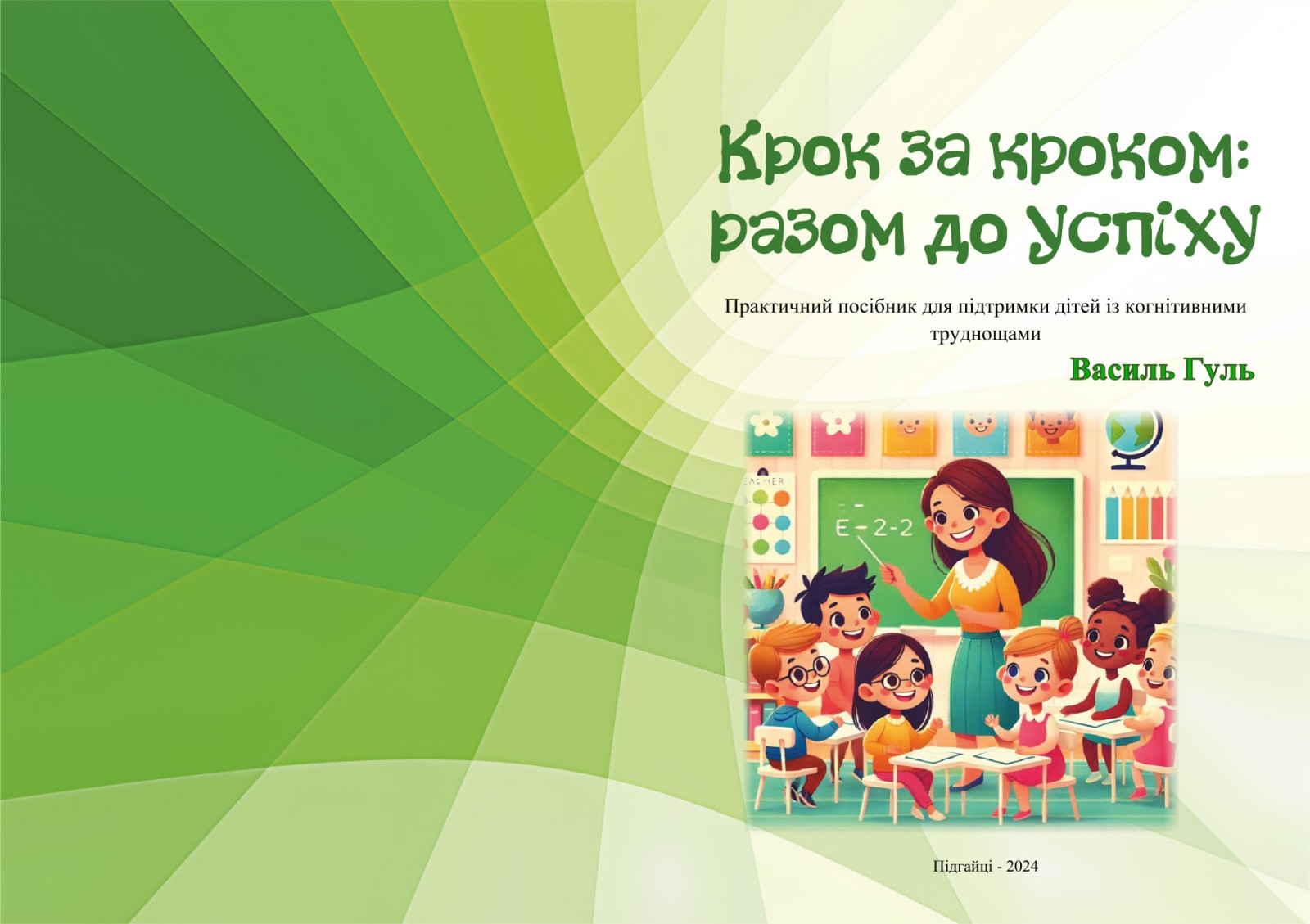
Practical guide "Step by Step: Together to Success":
This guide is a practical advisor for parents, teachers, and specialists working with children who have intellectual difficulties.
Goal: To create effective conditions for the learning and development of such children, promoting their social, emotional, and academic development.
Levels of difficulties and support: The guide details four levels of intellectual difficulties (from mild to profound) and the corresponding five levels of support (from First to Fifth), which determine the need for corrective classes and the involvement of specialists.
Age manifestations: Information is provided about the characteristics of difficulties in preschool, early school, and adolescent ages.
Practical recommendations: The guide contains specific advice for parents and teachers, as well as exercises for developing social (e.g., role-playing) and academic skills (memory, attention, thinking).
Organization of the environment: The principles of operation are highlighted, including creating a favorable environment, an individual approach, using a reward system, as well as examples of adapted tasks and sample schedules in the Appendices.
This guide is a practical advisor for parents, teachers, and specialists working with children who have intellectual difficulties.
Goal: To create effective conditions for the learning and development of such children, promoting their social, emotional, and academic development.
Levels of difficulties and support: The guide details four levels of intellectual difficulties (from mild to profound) and the corresponding five levels of support (from First to Fifth), which determine the need for corrective classes and the involvement of specialists.
Age manifestations: Information is provided about the characteristics of difficulties in preschool, early school, and adolescent ages.
Practical recommendations: The guide contains specific advice for parents and teachers, as well as exercises for developing social (e.g., role-playing) and academic skills (memory, attention, thinking).
Organization of the environment: The principles of operation are highlighted, including creating a favorable environment, an individual approach, using a reward system, as well as examples of adapted tasks and sample schedules in the Appendices.