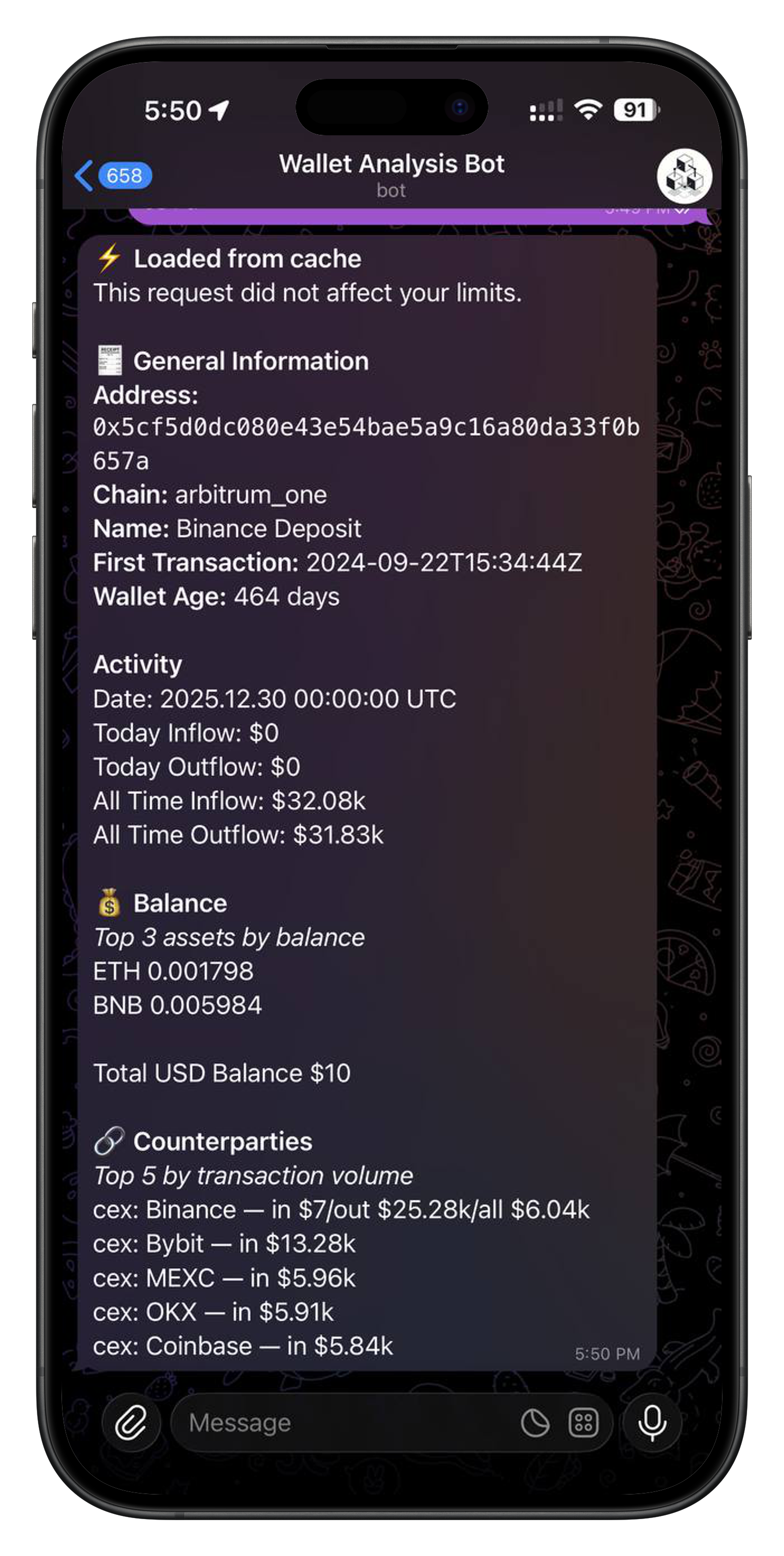
A Telegram bot designed for blockchain wallet analysis using on-chain data and third-party API integrations. The bot provides structured insights for a given wallet address, including balances, activity history, interactions with exchanges and smart contracts, and a summarized analytical overview — all directly inside Telegram.
The project is built with API rate limits and cost control in mind. In the MVP version, each user has a limited number of requests per month. To optimize performance and reduce unnecessary API calls, Redis is used as a caching layer, allowing repeated queries for the same wallet to be processed instantly.
A referral system is implemented to increase user request limits when new users are invited, encouraging organic growth. All user data, request limits, and states are stored in a database, ensuring stable operation even after bot restarts.
The current version is an MVP, but the architecture is designed for scalability from the start. The project is ready for further development and transition to a paid subscription model (subscriptions, request packages, advanced reports). With sufficient demand, additional analytics types, data sources, and administrative features can be added without reworking the core system.
The project is built with API rate limits and cost control in mind. In the MVP version, each user has a limited number of requests per month. To optimize performance and reduce unnecessary API calls, Redis is used as a caching layer, allowing repeated queries for the same wallet to be processed instantly.
A referral system is implemented to increase user request limits when new users are invited, encouraging organic growth. All user data, request limits, and states are stored in a database, ensuring stable operation even after bot restarts.
The current version is an MVP, but the architecture is designed for scalability from the start. The project is ready for further development and transition to a paid subscription model (subscriptions, request packages, advanced reports). With sufficient demand, additional analytics types, data sources, and administrative features can be added without reworking the core system.