Vibe: Social Media Web App
Website Development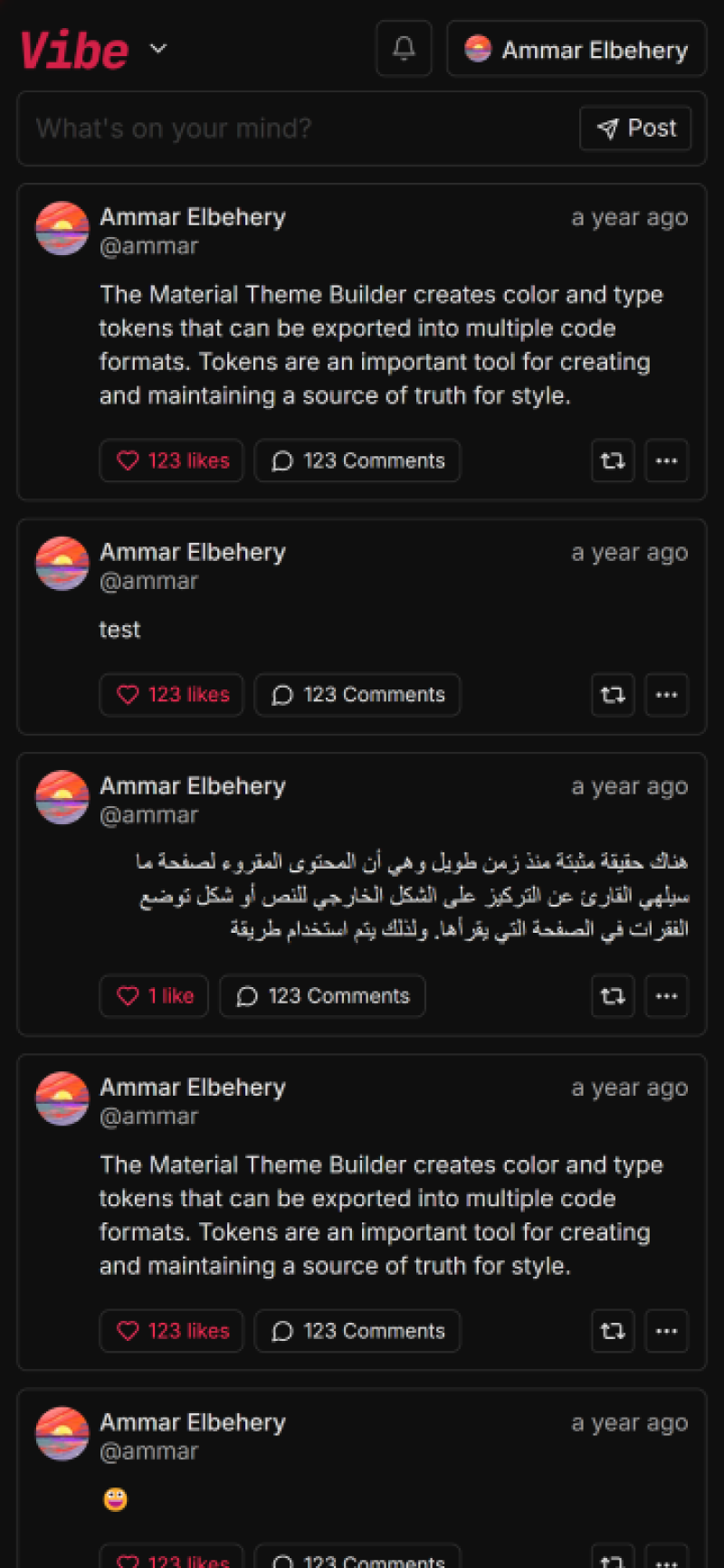
Vibe is a social media web application with a variety of features for user engagement, such as posts, likes, comments, and user mentions. The project began as a final assignment for CS50 and later evolved into a personal project for learning and practicing React and Next.js.
The Problem:
Unlike traditional projects, Vibe was not created to address a specific user problem. Instead, it served as a platform for learning and exploring modern web technologies. The challenge was primarily about improving development skills and understanding full-stack web development.
Goals and Objectives:
The main goal of Vibe was to create a fast, user-friendly social media application with a great user experience, responsive design, and strong SEO optimization. Additionally, it served as a platform to master React, Next.js, and full-stack development, allowing for the exploration of modern web technologies through practical implementation.
Development Process:
The project began with UX/UI design, which was crucial given that Vibe is a user-driven platform. Several iterations of design were made until a satisfying, aesthetically pleasing interface was achieved. After finalizing the design, the development phase involved incremental implementation of features, starting from core functionality and gradually adding new capabilities over time.
Results:
Vibe was completed in two months, but it continues to evolve as new features are added. The project successfully showcases skills in modern web development frameworks and databases, with a strong emphasis on user experience.
Key Features:
Some of the most notable features of Vibe include:
User Registration & Login: Users can create accounts, log in, and manage their profile.
CRUD Posts: Users can create, read, update, and delete posts, with the ability to mention other users.
Comments & Reactions: Users can comment on posts, like them, and react to posts with custom reactions.
Profile Pages: Users have their own profile pages to view posts and activity.
Following System: Users can follow others and see their posts in a personalized feed.
Notifications: Users are notified when someone likes their post or follows them.
Responsive Design: The app was designed mobile-first but adapts well to larger desktop screens.
Conclusion & Learnings:
Working on Vibe allowed for hands-on experience with Next.js, React, and PostgreSQL, enhancing both front-end and back-end development skills. This was particularly valuable as it was the first project of its kind.
The Problem:
Unlike traditional projects, Vibe was not created to address a specific user problem. Instead, it served as a platform for learning and exploring modern web technologies. The challenge was primarily about improving development skills and understanding full-stack web development.
Goals and Objectives:
The main goal of Vibe was to create a fast, user-friendly social media application with a great user experience, responsive design, and strong SEO optimization. Additionally, it served as a platform to master React, Next.js, and full-stack development, allowing for the exploration of modern web technologies through practical implementation.
Development Process:
The project began with UX/UI design, which was crucial given that Vibe is a user-driven platform. Several iterations of design were made until a satisfying, aesthetically pleasing interface was achieved. After finalizing the design, the development phase involved incremental implementation of features, starting from core functionality and gradually adding new capabilities over time.
Results:
Vibe was completed in two months, but it continues to evolve as new features are added. The project successfully showcases skills in modern web development frameworks and databases, with a strong emphasis on user experience.
Key Features:
Some of the most notable features of Vibe include:
User Registration & Login: Users can create accounts, log in, and manage their profile.
CRUD Posts: Users can create, read, update, and delete posts, with the ability to mention other users.
Comments & Reactions: Users can comment on posts, like them, and react to posts with custom reactions.
Profile Pages: Users have their own profile pages to view posts and activity.
Following System: Users can follow others and see their posts in a personalized feed.
Notifications: Users are notified when someone likes their post or follows them.
Responsive Design: The app was designed mobile-first but adapts well to larger desktop screens.
Conclusion & Learnings:
Working on Vibe allowed for hands-on experience with Next.js, React, and PostgreSQL, enhancing both front-end and back-end development skills. This was particularly valuable as it was the first project of its kind.