Website design for NanoWeb Agency
Web Design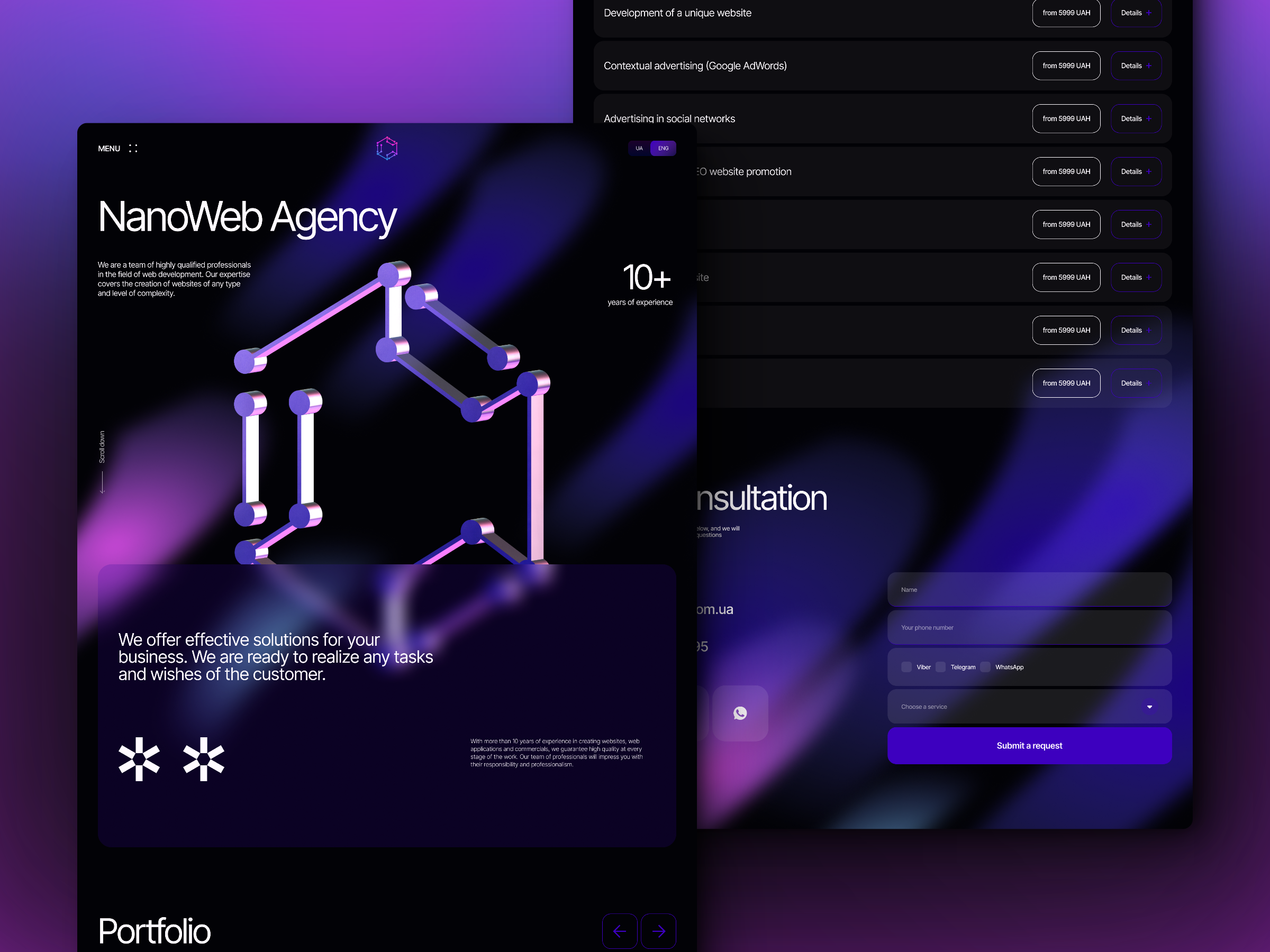
Project Overview:
The project involved creating a design concept for a web studio specializing in high-quality websites for businesses and individual clients. The main goal was to develop a visually expressive and professional website that reflects the team’s technical expertise, creativity, and modern approach.
Project Stages:
1. Research and Analysis:
• Requirements gathering — Interviews with studio representatives to identify their expectations and preferences.
• Competitor analysis — Researching similar websites and highlighting current trends in web design.
2. Concept Development:
• Ideation session — Shaping a unique concept that conveys the brand’s character and values.
• Visualization — Creating sketches and visual concepts for team discussion.
3. Design:
• Layout creation — Designing adaptive web interfaces based on the approved concept.
• UI/UX design — Developing a thoughtful structure and interaction logic for user convenience.
• Responsive design — Adapting the visuals for various devices and screen resolutions.
Conclusion:
Designing a website for a web studio is a multi-stage process that requires analytical thinking, creative vision, and close collaboration with the client’s team. Thanks to a structured approach, we successfully delivered a modern, user-friendly, and functional website that effectively represents the brand online.
The project involved creating a design concept for a web studio specializing in high-quality websites for businesses and individual clients. The main goal was to develop a visually expressive and professional website that reflects the team’s technical expertise, creativity, and modern approach.
Project Stages:
1. Research and Analysis:
• Requirements gathering — Interviews with studio representatives to identify their expectations and preferences.
• Competitor analysis — Researching similar websites and highlighting current trends in web design.
2. Concept Development:
• Ideation session — Shaping a unique concept that conveys the brand’s character and values.
• Visualization — Creating sketches and visual concepts for team discussion.
3. Design:
• Layout creation — Designing adaptive web interfaces based on the approved concept.
• UI/UX design — Developing a thoughtful structure and interaction logic for user convenience.
• Responsive design — Adapting the visuals for various devices and screen resolutions.
Conclusion:
Designing a website for a web studio is a multi-stage process that requires analytical thinking, creative vision, and close collaboration with the client’s team. Thanks to a structured approach, we successfully delivered a modern, user-friendly, and functional website that effectively represents the brand online.