Website Optimization: Speeding Up Loading and Improving Performance
A comprehensive optimization was carried out for the client's website, which significantly improved its performance metrics on mobile devices.
Results:
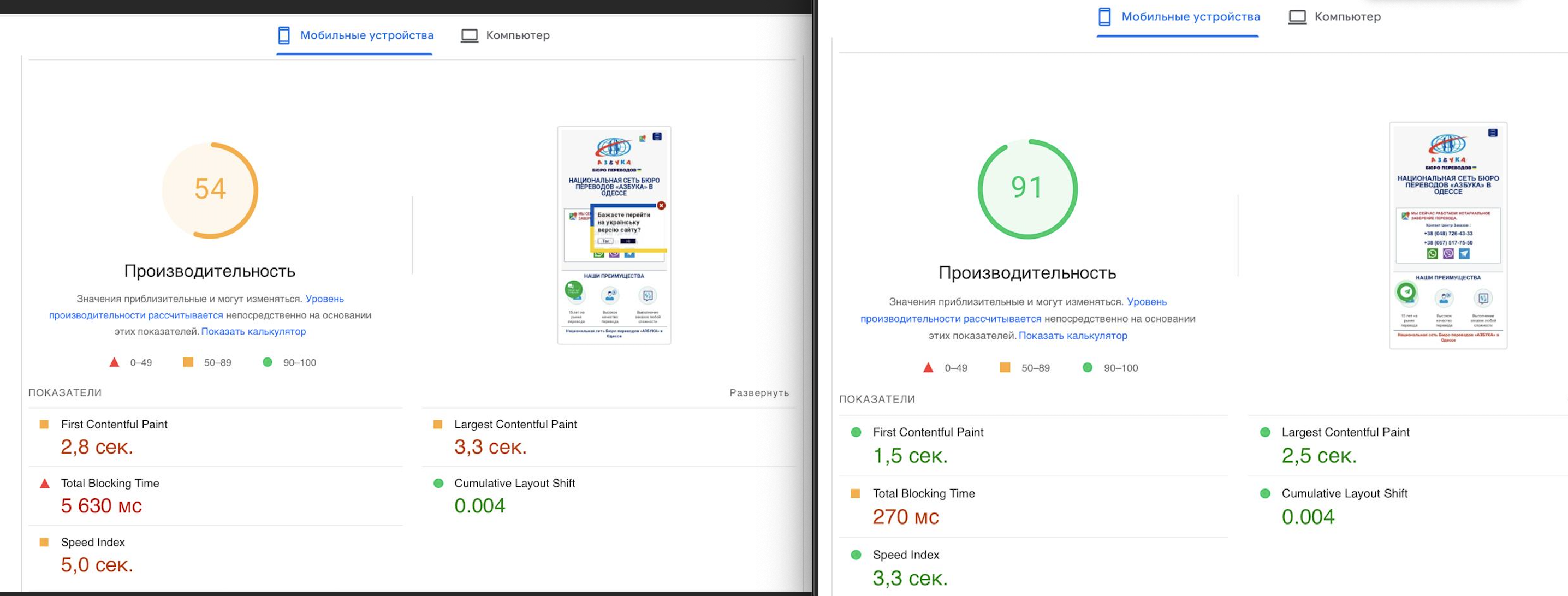
Before optimization: performance was 54 points, with a high Total Blocking Time of 5630 ms.
After optimization: performance reached 91 points, blocking time was reduced to 270 ms, and key loading speed metrics turned green.
What was done:
Resource loading optimization:
- Reduced image sizes and converted them to modern formats (WebP).
- Removed unnecessary scripts and minified CSS, JS.
- Implemented lazy loading for images and videos.
Caching configuration:
- Added long-term caching for static resources.
Rendering improvement:
- Moved critical styles to the top of the page.
- Deferred script loading (defer and async).
- Reduced server requests:
- Aggregated and compressed CSS and JS files.
- Removed unnecessary HTTP requests.
Server work:
- Implemented HTTP/2 for faster loading.
- Configured gzip compression.
Conclusion:
The website now meets modern speed and performance standards. This positively impacted user experience, search engine rankings, and conversion rates.
A comprehensive optimization was carried out for the client's website, which significantly improved its performance metrics on mobile devices.
Results:
Before optimization: performance was 54 points, with a high Total Blocking Time of 5630 ms.
After optimization: performance reached 91 points, blocking time was reduced to 270 ms, and key loading speed metrics turned green.
What was done:
Resource loading optimization:
- Reduced image sizes and converted them to modern formats (WebP).
- Removed unnecessary scripts and minified CSS, JS.
- Implemented lazy loading for images and videos.
Caching configuration:
- Added long-term caching for static resources.
Rendering improvement:
- Moved critical styles to the top of the page.
- Deferred script loading (defer and async).
- Reduced server requests:
- Aggregated and compressed CSS and JS files.
- Removed unnecessary HTTP requests.
Server work:
- Implemented HTTP/2 for faster loading.
- Configured gzip compression.
Conclusion:
The website now meets modern speed and performance standards. This positively impacted user experience, search engine rankings, and conversion rates.