Development of a web application for water consumption management
HTML & CSS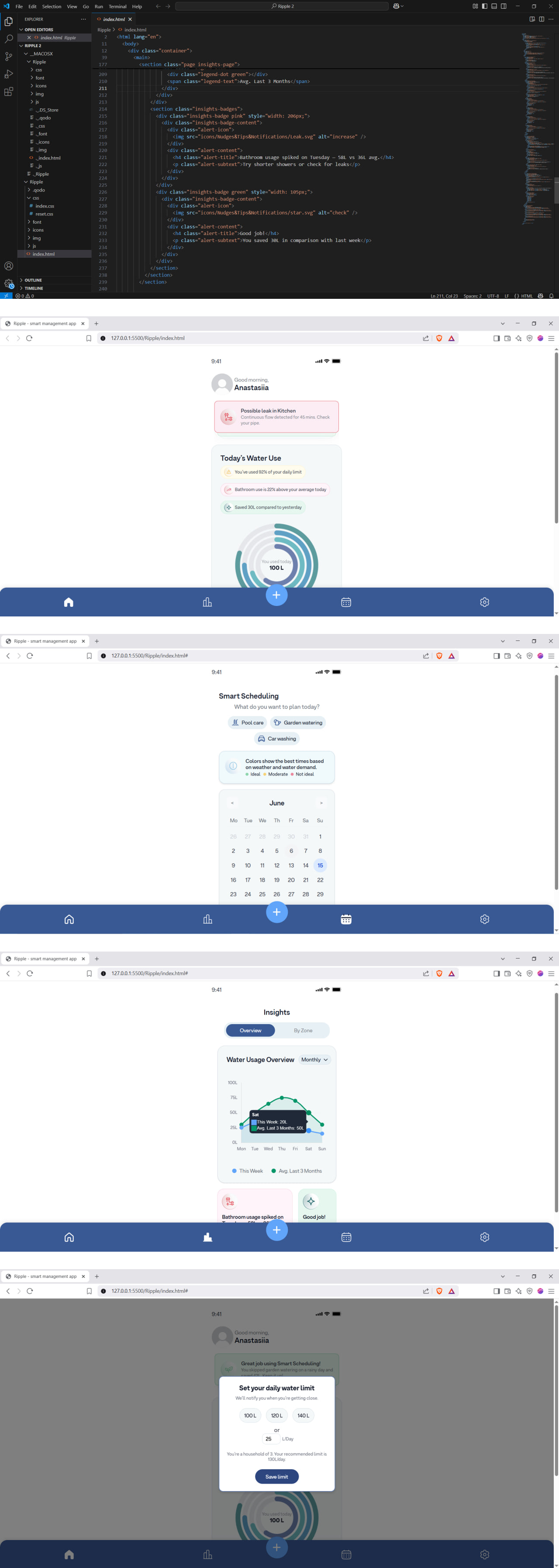
A complete front-end interface development cycle for "Ripple" has been completed — a progressive web application (PWA) designed for smart water management and conservation in households.
Main goal: To transform complex water consumption data into a simple, understandable, and actionable tool that helps users develop eco-friendly habits and reduce expenses.
Stage: Technical implementation (Front-End Development)
Technologies: The interface was built from scratch using HTML5, CSS3, and JavaScript. The code is clean, semantic, and well-structured, as seen in the screenshot from the code editor.
Interactivity: Key interactive elements implemented with JavaScript include:
- Dynamic charts for visualizing consumption statistics.
- Modal windows for setting daily limits.
- Calendar logic for the "Smart Scheduling" feature.
- Notification system and dynamic tips.
Component approach: Development was carried out using a component-based approach (cards, buttons, notifications), ensuring design consistency and easier future maintenance.
Implemented features:
- Dashboard: Main screen with a greeting, daily consumption limit, and critical notifications.
- Insights: Section with detailed water usage analytics over different periods.
- Smart Scheduling: Tool for planning consumption tasks (watering the garden, car washing) at the most optimal times.
Conclusion:
As a result, a functional and visually appealing web application has been created. The project demonstrates skills in the full cycle of creating modern web interfaces — from initial design to final implementation with clean code.
#frontend #HTML #CSS #JavaScript #UI #UX #webapp #design #development #PWA
Main goal: To transform complex water consumption data into a simple, understandable, and actionable tool that helps users develop eco-friendly habits and reduce expenses.
Stage: Technical implementation (Front-End Development)
Technologies: The interface was built from scratch using HTML5, CSS3, and JavaScript. The code is clean, semantic, and well-structured, as seen in the screenshot from the code editor.
Interactivity: Key interactive elements implemented with JavaScript include:
- Dynamic charts for visualizing consumption statistics.
- Modal windows for setting daily limits.
- Calendar logic for the "Smart Scheduling" feature.
- Notification system and dynamic tips.
Component approach: Development was carried out using a component-based approach (cards, buttons, notifications), ensuring design consistency and easier future maintenance.
Implemented features:
- Dashboard: Main screen with a greeting, daily consumption limit, and critical notifications.
- Insights: Section with detailed water usage analytics over different periods.
- Smart Scheduling: Tool for planning consumption tasks (watering the garden, car washing) at the most optimal times.
Conclusion:
As a result, a functional and visually appealing web application has been created. The project demonstrates skills in the full cycle of creating modern web interfaces — from initial design to final implementation with clean code.
#frontend #HTML #CSS #JavaScript #UI #UX #webapp #design #development #PWA