AI generation of a comprehensive advertising campaign for Pepsi
AI Art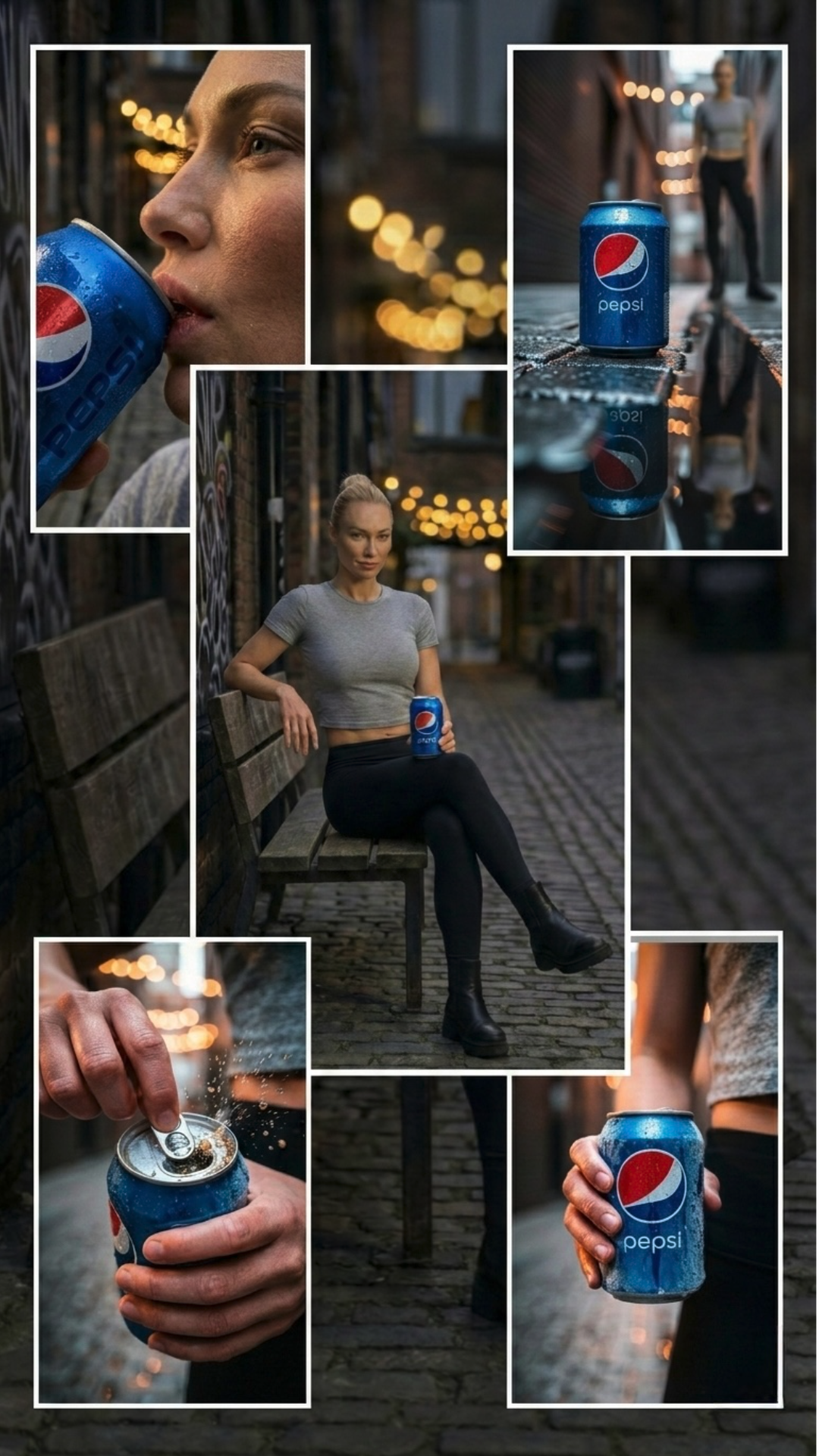
Type of work: Creation of advertising content using artificial intelligence.
Project description:
This work demonstrates a modern approach to creating visual content, where the entire advertising campaign was generated using advanced artificial intelligence technologies without conducting actual photography. The goal was to create a series of high-quality, atmospheric images that combine the freshness of the product with an urban aesthetic.
Instead of one perfect shot, a detailed collage was created that showcases various aspects of consumer interaction with the product and the context of consumption.
Visual breakdown:
The collage is constructed as a mosaic of five detailed shots against a textured background of an urban alley at dusk. Each shot has a clear white frame, adding a premium look to the presentation.
1. Profile and texture (top left): A close-up of a woman drinking from a can of Pepsi. She emphasized micro-details: skin texture, individual hairs, water droplets on her face and the fogged can. This shot conveys the emotion of enjoyment.
2. Depth and reflection (top right): A complex, conceptual shot from ground level. The can of Pepsi stands on wet cobblestones. She generated a clear reflection of the can, the woman in the background, and the garlands in the puddle. This adds depth and creates atmosphere.
3. Central context (in the center): The main character (a blonde in gray sportswear and black leggings) sits on a wooden bench in the alley, holding a can of Pepsi. She looks at the camera. The garlands in the background create the perfect warm bokeh. This is a classic advertising portrait.
4. Moment of opening (bottom left): A dynamic macro shot of a hand opening a can of Pepsi. At the moment of opening, splashes of the drink fly out. She generated realistic fluid dynamics, skin texture of the hand, and the cobblestones in the background.
5. Product portrait (bottom right): A close-up of a hand holding a fogged can of Pepsi. Focus on the texture of the aluminum, the logo, and water droplets that emphasize freshness.
AI generation process:
• Consistency control: Creating consistency of character, clothing, lighting, and product (Pepsi can with logo) across different shots and angles.
• Lighting management: Generating complex lighting of the urban alley at dusk: contrast between cold shadows and warm bokeh from the garlands.
• Textures: AI successfully generated various textures: metal of the can, water (droplets, puddles, splashes), skin, fabric of clothing, wood of the bench, and cobblestones.
• Iterations: Conducting multiple iterations of prompts to achieve the ideal composition, pose, emotion, and photorealism quality for each individual shot.
Advantages of this approach:
• Resource savings: No need to rent locations, equipment, hire actors, makeup artists, and organize complex shoots at dusk.
• Speed: Creation of a complete series of advertising shots in a fraction of the time required for traditional production.
• Flexibility: The ability to easily and quickly change details (clothing, location, lighting) without additional costs.
• High quality: The ability to generate details that are difficult or impossible to capture with a real camera (for example, precise dynamics of splashes or reflections in a puddle).
Project description:
This work demonstrates a modern approach to creating visual content, where the entire advertising campaign was generated using advanced artificial intelligence technologies without conducting actual photography. The goal was to create a series of high-quality, atmospheric images that combine the freshness of the product with an urban aesthetic.
Instead of one perfect shot, a detailed collage was created that showcases various aspects of consumer interaction with the product and the context of consumption.
Visual breakdown:
The collage is constructed as a mosaic of five detailed shots against a textured background of an urban alley at dusk. Each shot has a clear white frame, adding a premium look to the presentation.
1. Profile and texture (top left): A close-up of a woman drinking from a can of Pepsi. She emphasized micro-details: skin texture, individual hairs, water droplets on her face and the fogged can. This shot conveys the emotion of enjoyment.
2. Depth and reflection (top right): A complex, conceptual shot from ground level. The can of Pepsi stands on wet cobblestones. She generated a clear reflection of the can, the woman in the background, and the garlands in the puddle. This adds depth and creates atmosphere.
3. Central context (in the center): The main character (a blonde in gray sportswear and black leggings) sits on a wooden bench in the alley, holding a can of Pepsi. She looks at the camera. The garlands in the background create the perfect warm bokeh. This is a classic advertising portrait.
4. Moment of opening (bottom left): A dynamic macro shot of a hand opening a can of Pepsi. At the moment of opening, splashes of the drink fly out. She generated realistic fluid dynamics, skin texture of the hand, and the cobblestones in the background.
5. Product portrait (bottom right): A close-up of a hand holding a fogged can of Pepsi. Focus on the texture of the aluminum, the logo, and water droplets that emphasize freshness.
AI generation process:
• Consistency control: Creating consistency of character, clothing, lighting, and product (Pepsi can with logo) across different shots and angles.
• Lighting management: Generating complex lighting of the urban alley at dusk: contrast between cold shadows and warm bokeh from the garlands.
• Textures: AI successfully generated various textures: metal of the can, water (droplets, puddles, splashes), skin, fabric of clothing, wood of the bench, and cobblestones.
• Iterations: Conducting multiple iterations of prompts to achieve the ideal composition, pose, emotion, and photorealism quality for each individual shot.
Advantages of this approach:
• Resource savings: No need to rent locations, equipment, hire actors, makeup artists, and organize complex shoots at dusk.
• Speed: Creation of a complete series of advertising shots in a fraction of the time required for traditional production.
• Flexibility: The ability to easily and quickly change details (clothing, location, lighting) without additional costs.
• High quality: The ability to generate details that are difficult or impossible to capture with a real camera (for example, precise dynamics of splashes or reflections in a puddle).