Task
Help a businesswoman with over 20 years of operational management experience package practical knowledge into a structured business book.
What was done
Served as a ghostwriter, processing over 100 pages of raw materials (audio, notes, texts), structuring and detailing the content while preserving the author's voice. Worked in stages, without strict deadlines, adapting the book's architecture to the individual requests of the client.
Level of requirements
The challenge lay in the client's low engagement due to a tight schedule, the need to systematize disparate, often unformatted materials, and to preserve the author's unique style as much as possible. It was necessary to carefully filter out template content and motivational fluff to make the book truly expert and logical.
Result and evidence
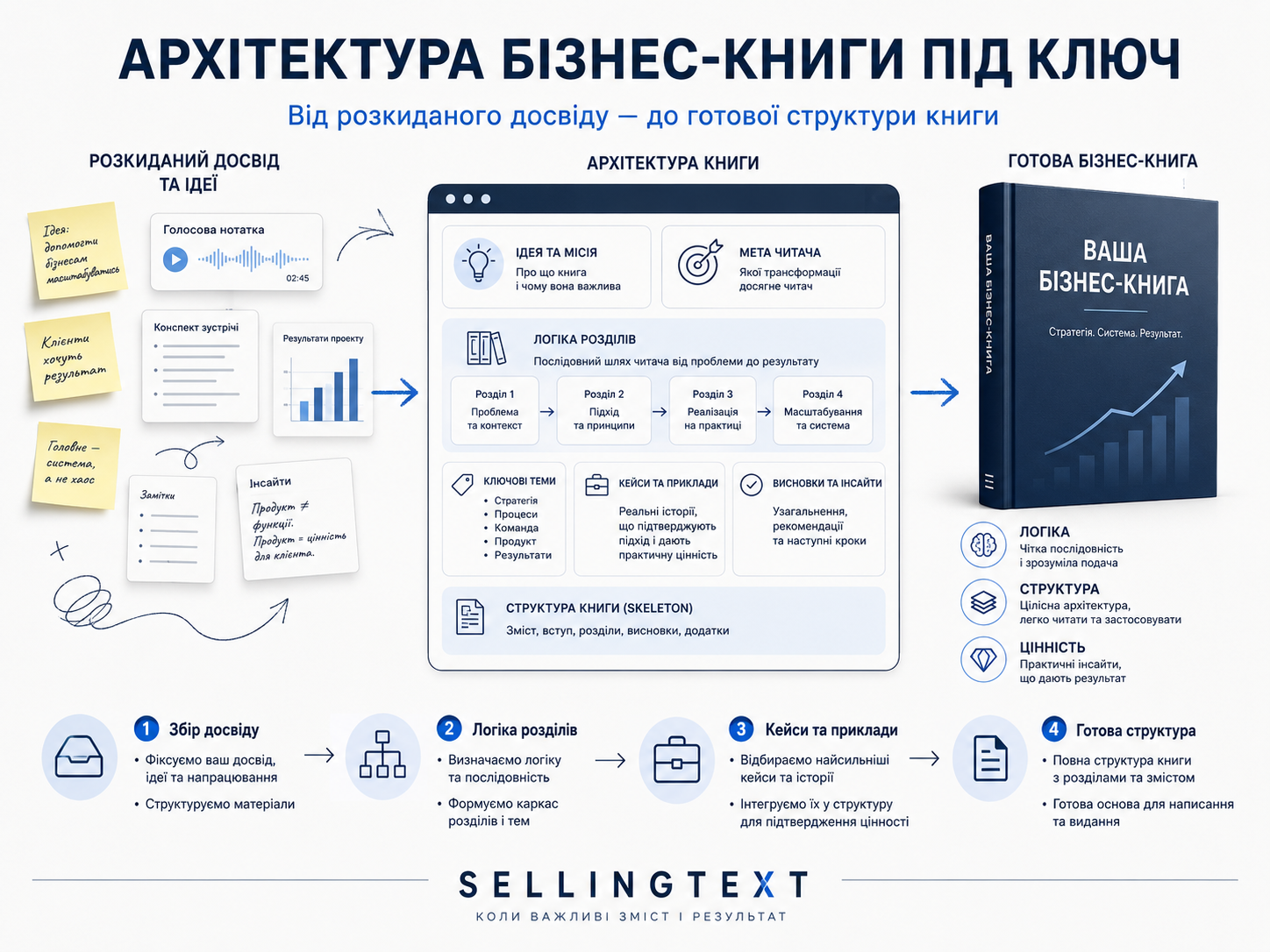
A clear architecture of the business book was created with a logical division into stages of company development, scaling, roles, and operational processes. 84 articles and text fragments were recorded, adapted to the client's voice. The approval and editing process was flexible without time constraints, aligning with the format of working with management and ensuring complete confidentiality (NDA). There are no public reviews or quantitative metrics as per the agreement.
Conclusion
Ghostwriting the business book with an emphasis on systematization and the author's style allowed for the organization of the businesswoman's extensive experience while minimizing her involvement in the process. This is an effective format for executives who do not have time to write but want to preserve their unique experience in a readable form.
Help a businesswoman with over 20 years of operational management experience package practical knowledge into a structured business book.
What was done
Served as a ghostwriter, processing over 100 pages of raw materials (audio, notes, texts), structuring and detailing the content while preserving the author's voice. Worked in stages, without strict deadlines, adapting the book's architecture to the individual requests of the client.
Level of requirements
The challenge lay in the client's low engagement due to a tight schedule, the need to systematize disparate, often unformatted materials, and to preserve the author's unique style as much as possible. It was necessary to carefully filter out template content and motivational fluff to make the book truly expert and logical.
Result and evidence
A clear architecture of the business book was created with a logical division into stages of company development, scaling, roles, and operational processes. 84 articles and text fragments were recorded, adapted to the client's voice. The approval and editing process was flexible without time constraints, aligning with the format of working with management and ensuring complete confidentiality (NDA). There are no public reviews or quantitative metrics as per the agreement.
Conclusion
Ghostwriting the business book with an emphasis on systematization and the author's style allowed for the organization of the businesswoman's extensive experience while minimizing her involvement in the process. This is an effective format for executives who do not have time to write but want to preserve their unique experience in a readable form.