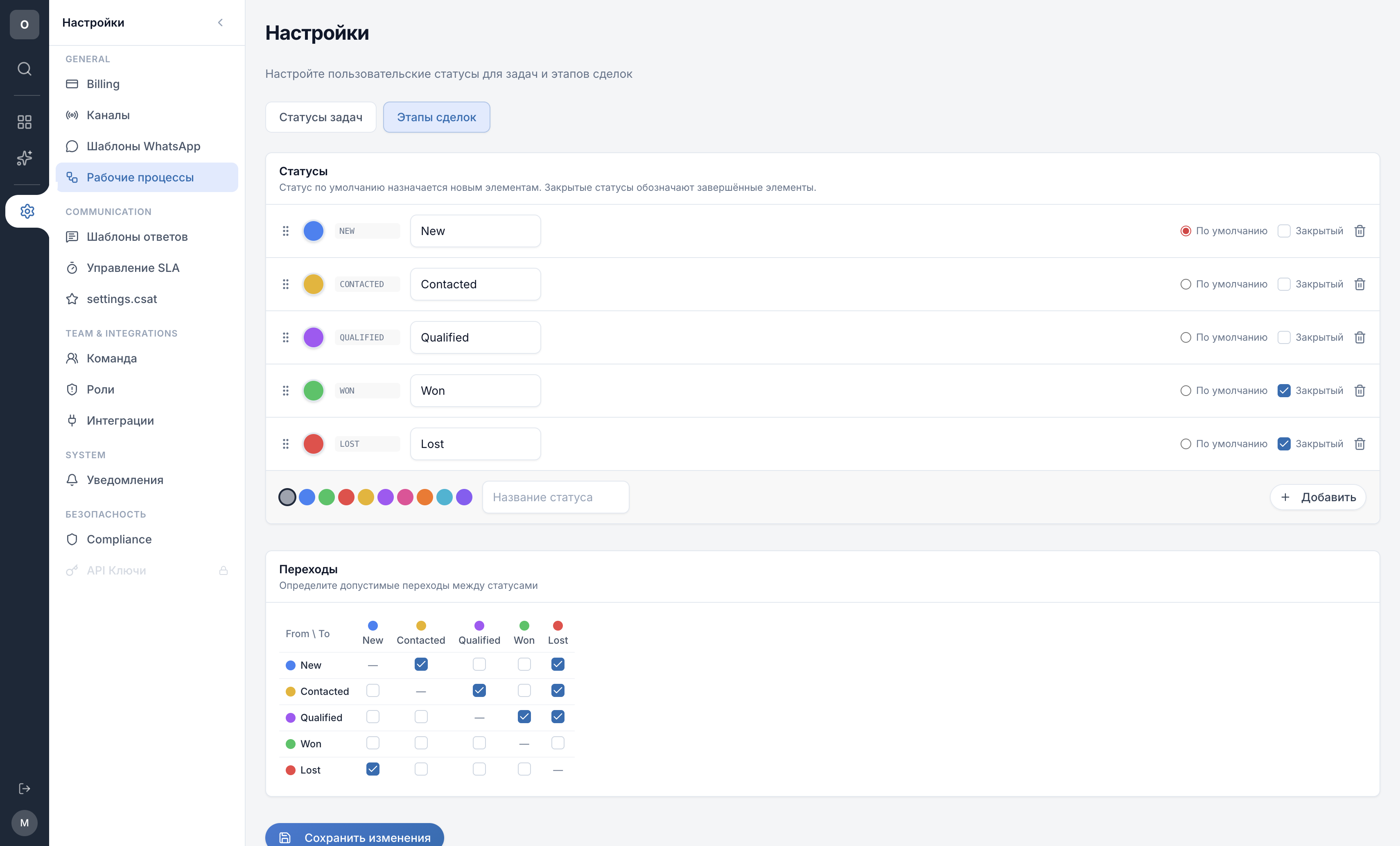
OmniAI — a full-fledged SaaS platform developed from scratch: from designing architecture and database to a production-ready interface. It unifies all customer communication channels in a single window and enhances operator work with artificial intelligence.
Problem: businesses lose customers when messages are scattered across messengers and social networks. Operators switch between tabs, lose context, and managers do not see the full picture. OmniAI solves this — all communications in one Inbox, and AI takes over the routine.
What has been implemented:
— Unified Inbox: messages from Telegram and other channels are collected in one interface with real-time updates via WebSocket. The operator sees the dialogue history, customer profile, and responds without leaving the platform.
— AI Assistant: automatic summarization of dialogues, customer sentiment analysis, response suggestions. The operator quickly understands the context and does not miss problematic customers.
— Interactive Dashboard: widgets with drag-and-drop, statistics on inquiries, conversions, operator workload in real-time.
— Multitenancy: data isolation between companies at the PostgreSQL Row Level Security level. Each business in its own secure space.
— Automation: integration with n8n for action chains — assigning responsibility, notifications, escalation, triggers based on keywords — no code required.
— Multilingual: the interface is localized in Russian, English, and Azerbaijani.
— Authorization: Clerk + JWT, automatic tenant creation upon first login.
Stack:
Frontend: Next.js 15, React, Tailwind CSS v4, Zustand, next-intl
Backend: NestJS, Prisma, PostgreSQL + pgvector, Redis, BullMQ
Infra: Docker Compose, Turborepo, WebSocket
AI: LLM integration for summarization and sentiment analysis
Features:
— Monorepo with separation into web, api, and shared package
— Common TypeScript types between frontend and backend
— Task queues via BullMQ for background operations
— Custom design system without ready-made UI libraries — full control over UI
— Adaptive layout with dark theme
#CRM #SaaS #NextJS #NestJS #TypeScript #AI #FullStack #React #PostgreSQL #WebSocket #Docker
Problem: businesses lose customers when messages are scattered across messengers and social networks. Operators switch between tabs, lose context, and managers do not see the full picture. OmniAI solves this — all communications in one Inbox, and AI takes over the routine.
What has been implemented:
— Unified Inbox: messages from Telegram and other channels are collected in one interface with real-time updates via WebSocket. The operator sees the dialogue history, customer profile, and responds without leaving the platform.
— AI Assistant: automatic summarization of dialogues, customer sentiment analysis, response suggestions. The operator quickly understands the context and does not miss problematic customers.
— Interactive Dashboard: widgets with drag-and-drop, statistics on inquiries, conversions, operator workload in real-time.
— Multitenancy: data isolation between companies at the PostgreSQL Row Level Security level. Each business in its own secure space.
— Automation: integration with n8n for action chains — assigning responsibility, notifications, escalation, triggers based on keywords — no code required.
— Multilingual: the interface is localized in Russian, English, and Azerbaijani.
— Authorization: Clerk + JWT, automatic tenant creation upon first login.
Stack:
Frontend: Next.js 15, React, Tailwind CSS v4, Zustand, next-intl
Backend: NestJS, Prisma, PostgreSQL + pgvector, Redis, BullMQ
Infra: Docker Compose, Turborepo, WebSocket
AI: LLM integration for summarization and sentiment analysis
Features:
— Monorepo with separation into web, api, and shared package
— Common TypeScript types between frontend and backend
— Task queues via BullMQ for background operations
— Custom design system without ready-made UI libraries — full control over UI
— Adaptive layout with dark theme
#CRM #SaaS #NextJS #NestJS #TypeScript #AI #FullStack #React #PostgreSQL #WebSocket #Docker