Optimization and structuring of content: transformation of SEO rewriting
Rewriting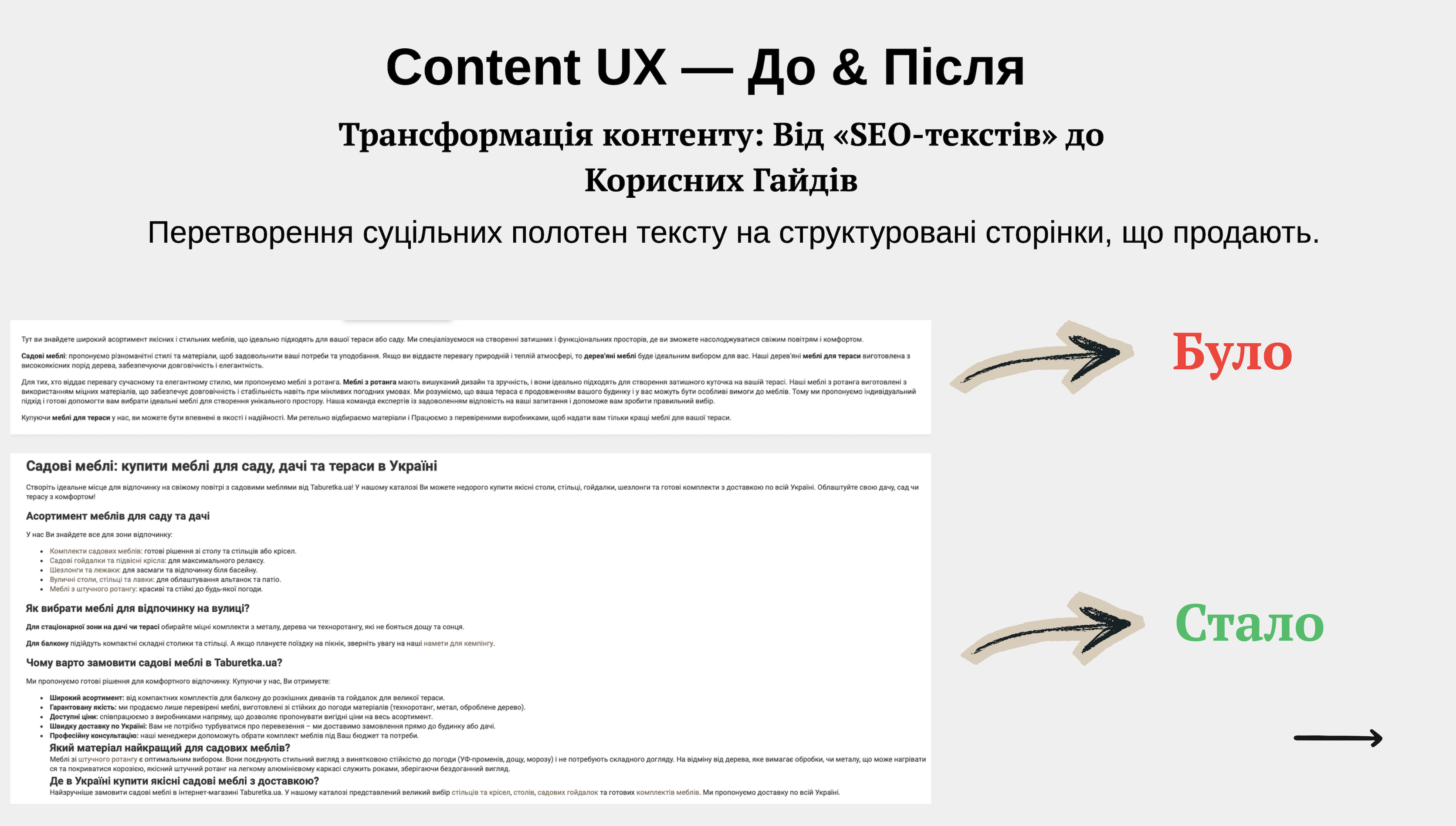
This case clearly demonstrates my work on improving content quality (Content UX) and compliance with Google E-E-A-T requirements.
Problem (Before): standard SEO rewrite "canvas," which is hard to read, has low user value, and an outdated structure.
Solution (After):
1. Deep structuring: breaking the text into logical blocks using bullet points, subheadings, and highlights.
2. Usefulness (User Intent): transforming a dry description into a practical guide that helps the user make a choice.
3. Visual ease: optimizing the presentation of information, which improves behavioral factors (time on page, depth of view).
4. LSI and keys: organic implementation of semantics without keyword stuffing, allowing the page to rank better for thematic clusters.
Result:
Improving content readability directly affects the reduction of the bounce rate and the increase in conversion. This approach was part of a strategy that ensured stable organic growth to 10.5 million sessions.
Problem (Before): standard SEO rewrite "canvas," which is hard to read, has low user value, and an outdated structure.
Solution (After):
1. Deep structuring: breaking the text into logical blocks using bullet points, subheadings, and highlights.
2. Usefulness (User Intent): transforming a dry description into a practical guide that helps the user make a choice.
3. Visual ease: optimizing the presentation of information, which improves behavioral factors (time on page, depth of view).
4. LSI and keys: organic implementation of semantics without keyword stuffing, allowing the page to rank better for thematic clusters.
Result:
Improving content readability directly affects the reduction of the bounce rate and the increase in conversion. This approach was part of a strategy that ensured stable organic growth to 10.5 million sessions.