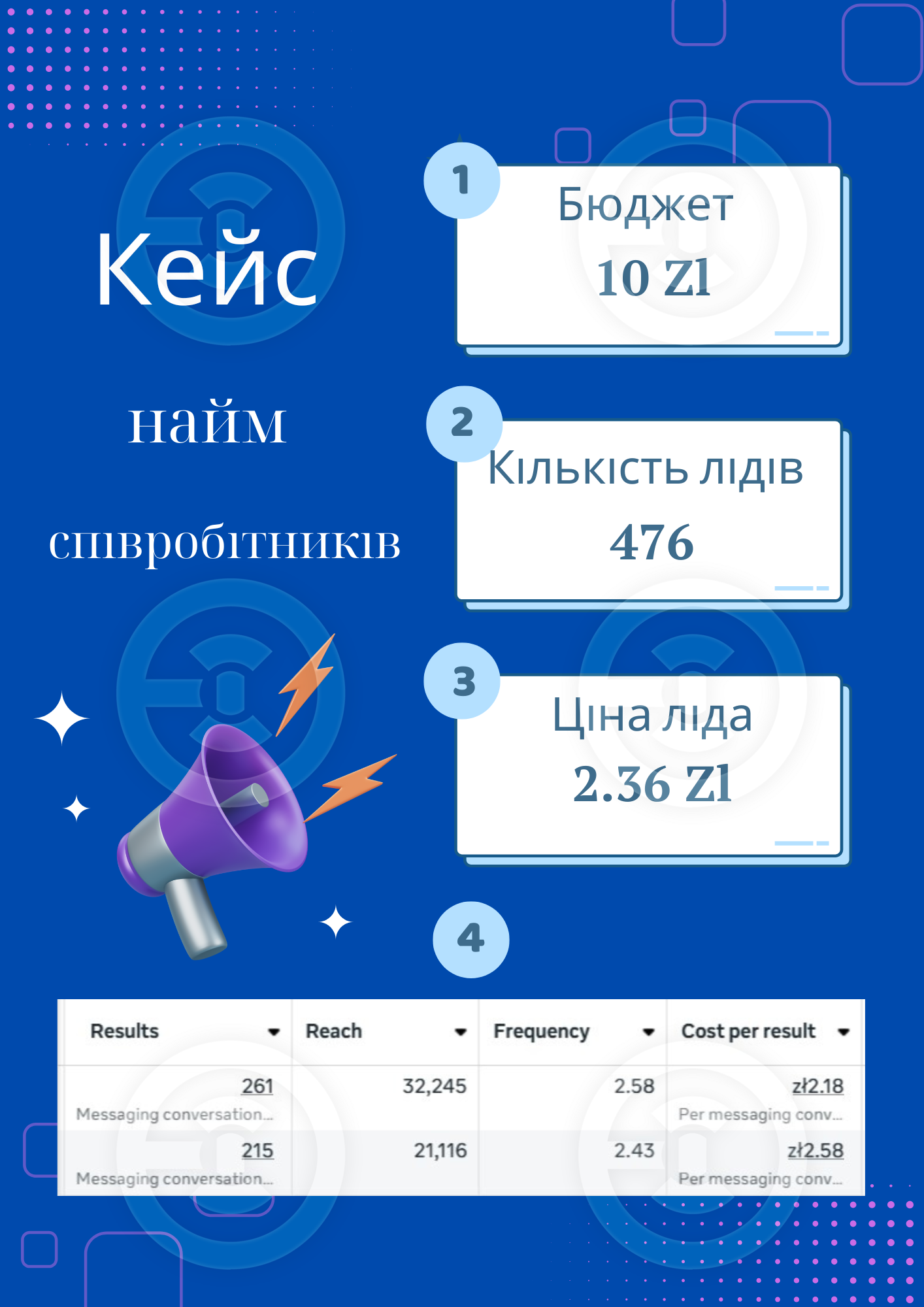
When I run job advertisements on Meta (Facebook / Instagram), I always first choose the correct category — Employment. This is important because without it, the ads may not pass moderation or may be immediately banned. Meta is quite strict about employment topics, so it's better to do everything by the rules right away. After selecting the category, of course, there are restrictions — I cannot set age, gender, income, but interests, geo, and my own audiences remain, and working with them is quite feasible.
Next, I work on the texts and creatives. Here, it is important — no discrimination. No "men needed up to 35," "only for women," or "vacancy for students." I write in a way that nothing can be criticized: briefly, to the point, with an emphasis on conditions, schedule, payment, and workplace. Only then does the ad not raise unnecessary questions on Facebook and can be launched quickly.
After preparing the content, I test several formats. Usually — Meta lead form, landing page transition, or Telegram bot. In each case, I look at the cost per application, lead quality, and conversion to calls. In the case of a bot — it is especially important that the first message is simple, clear, and immediately offers candidates to answer 2–3 basic questions.
When I see which option works better — I scale up. I connect lookalike audiences of those who have already submitted applications. This allows me not to waste the budget and to get more or less relevant candidates.
From experience, I will say: Meta is very sensitive to everything related to employment. Just a wrong formulation — and immediately either rejection or risk of account restriction. That’s why I always work like this: correct category, transparent text, real vacancy. Only then does the advertising produce results — not just clicks, but live applications from people genuinely interested in the job.
If needed — I can do the entire cycle turnkey: from profile audit to applications. I already have established connections between creatives, audiences, and formats, and I know what works in the fields of warehousing, construction, seasonal work in Ukraine and the EU. I test everything and measure by numbers — lead cost, response rate, budget efficiency. So — contact me!
Next, I work on the texts and creatives. Here, it is important — no discrimination. No "men needed up to 35," "only for women," or "vacancy for students." I write in a way that nothing can be criticized: briefly, to the point, with an emphasis on conditions, schedule, payment, and workplace. Only then does the ad not raise unnecessary questions on Facebook and can be launched quickly.
After preparing the content, I test several formats. Usually — Meta lead form, landing page transition, or Telegram bot. In each case, I look at the cost per application, lead quality, and conversion to calls. In the case of a bot — it is especially important that the first message is simple, clear, and immediately offers candidates to answer 2–3 basic questions.
When I see which option works better — I scale up. I connect lookalike audiences of those who have already submitted applications. This allows me not to waste the budget and to get more or less relevant candidates.
From experience, I will say: Meta is very sensitive to everything related to employment. Just a wrong formulation — and immediately either rejection or risk of account restriction. That’s why I always work like this: correct category, transparent text, real vacancy. Only then does the advertising produce results — not just clicks, but live applications from people genuinely interested in the job.
If needed — I can do the entire cycle turnkey: from profile audit to applications. I already have established connections between creatives, audiences, and formats, and I know what works in the fields of warehousing, construction, seasonal work in Ukraine and the EU. I test everything and measure by numbers — lead cost, response rate, budget efficiency. So — contact me!