Task
There was no transparent system for accounting consumables in the warehouse: employees constantly checked the stock "manually," errors occurred, urgent reorders were needed, and downtime happened due to missing items. It was necessary to implement a simple tool that would provide up-to-date accounting for the warehouse, office, and purchasing department.
Solution
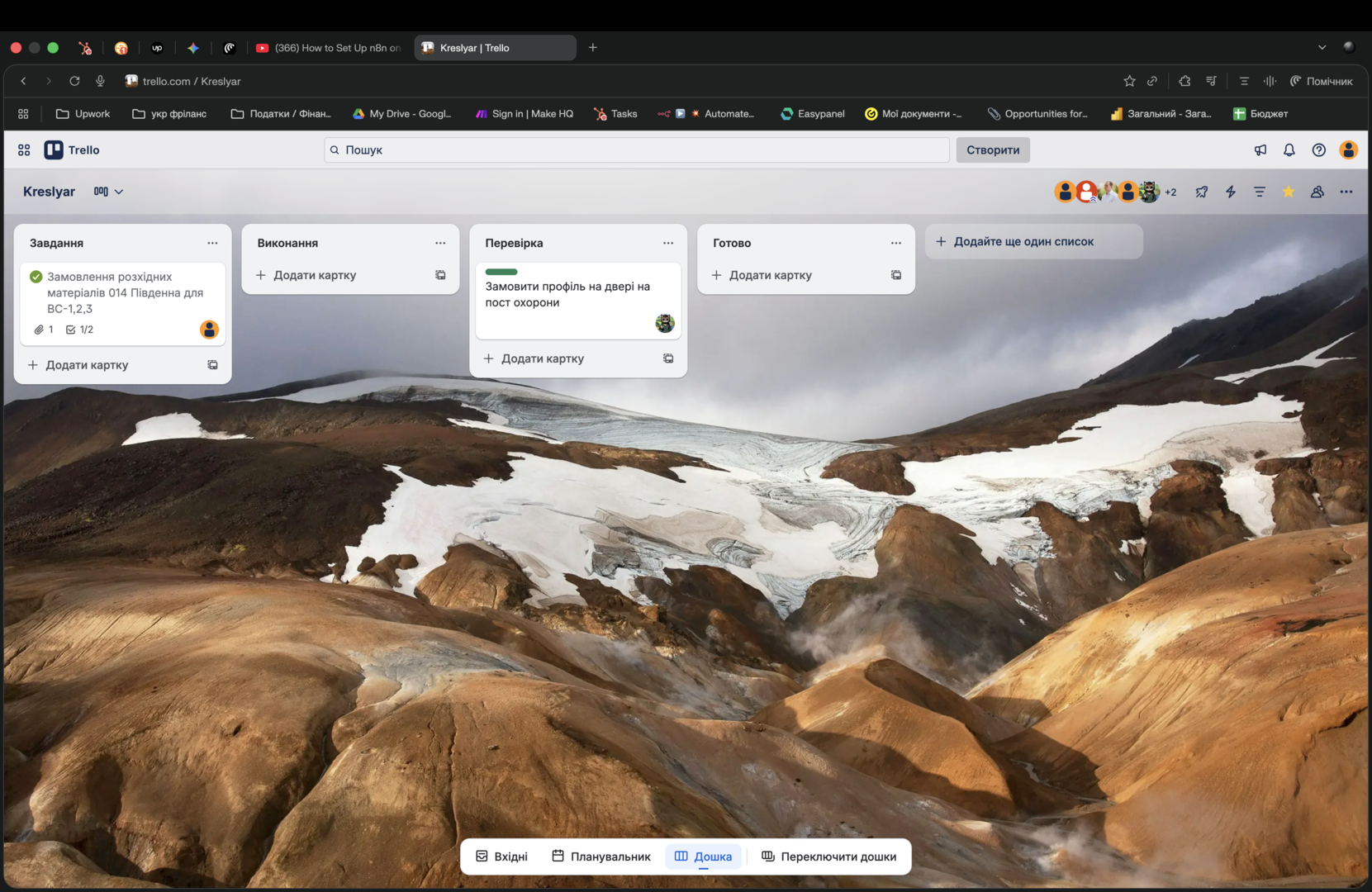
A simple accounting table (Google Sheets / Excel) was created with key fields: material name and article number, current stock, minimum stock (reorder point), date of last receipt and issuance, responsible person. For daily operations, a process was implemented: the warehouse worker updates the data in the table after each issuance, and once a week, the responsible person reviews the items where the stock is below the minimum and creates an order. The table is linked to a working board in Trello: a separate card is created for each order, where the status is recorded and there is a link to the accounting table.
Result
A transparent and up-to-date accounting system emerged: actual stock levels for all consumables can be seen at any moment. The number of urgent purchases and downtime due to missing materials significantly decreased, and planning for purchases and budgets became predictable thanks to the expense history for each item. Operational communication was simplified: instead of calls and correspondence, employees use the table and Trello cards.
In numbers
- 30+ names of consumables are centrally managed in one table.
- Up to 70-80% fewer urgent "emergency" purchases in the first month after implementation.
- Up to 2 hours of weekly time savings for the manager/warehouse worker in gathering data on stock levels.
- 100% of teams working with the warehouse (office, purchasing, production) have constant access to up-to-date data.
There was no transparent system for accounting consumables in the warehouse: employees constantly checked the stock "manually," errors occurred, urgent reorders were needed, and downtime happened due to missing items. It was necessary to implement a simple tool that would provide up-to-date accounting for the warehouse, office, and purchasing department.
Solution
A simple accounting table (Google Sheets / Excel) was created with key fields: material name and article number, current stock, minimum stock (reorder point), date of last receipt and issuance, responsible person. For daily operations, a process was implemented: the warehouse worker updates the data in the table after each issuance, and once a week, the responsible person reviews the items where the stock is below the minimum and creates an order. The table is linked to a working board in Trello: a separate card is created for each order, where the status is recorded and there is a link to the accounting table.
Result
A transparent and up-to-date accounting system emerged: actual stock levels for all consumables can be seen at any moment. The number of urgent purchases and downtime due to missing materials significantly decreased, and planning for purchases and budgets became predictable thanks to the expense history for each item. Operational communication was simplified: instead of calls and correspondence, employees use the table and Trello cards.
In numbers
- 30+ names of consumables are centrally managed in one table.
- Up to 70-80% fewer urgent "emergency" purchases in the first month after implementation.
- Up to 2 hours of weekly time savings for the manager/warehouse worker in gathering data on stock levels.
- 100% of teams working with the warehouse (office, purchasing, production) have constant access to up-to-date data.