BECKWITH–WIEDEMANN SYNDROME
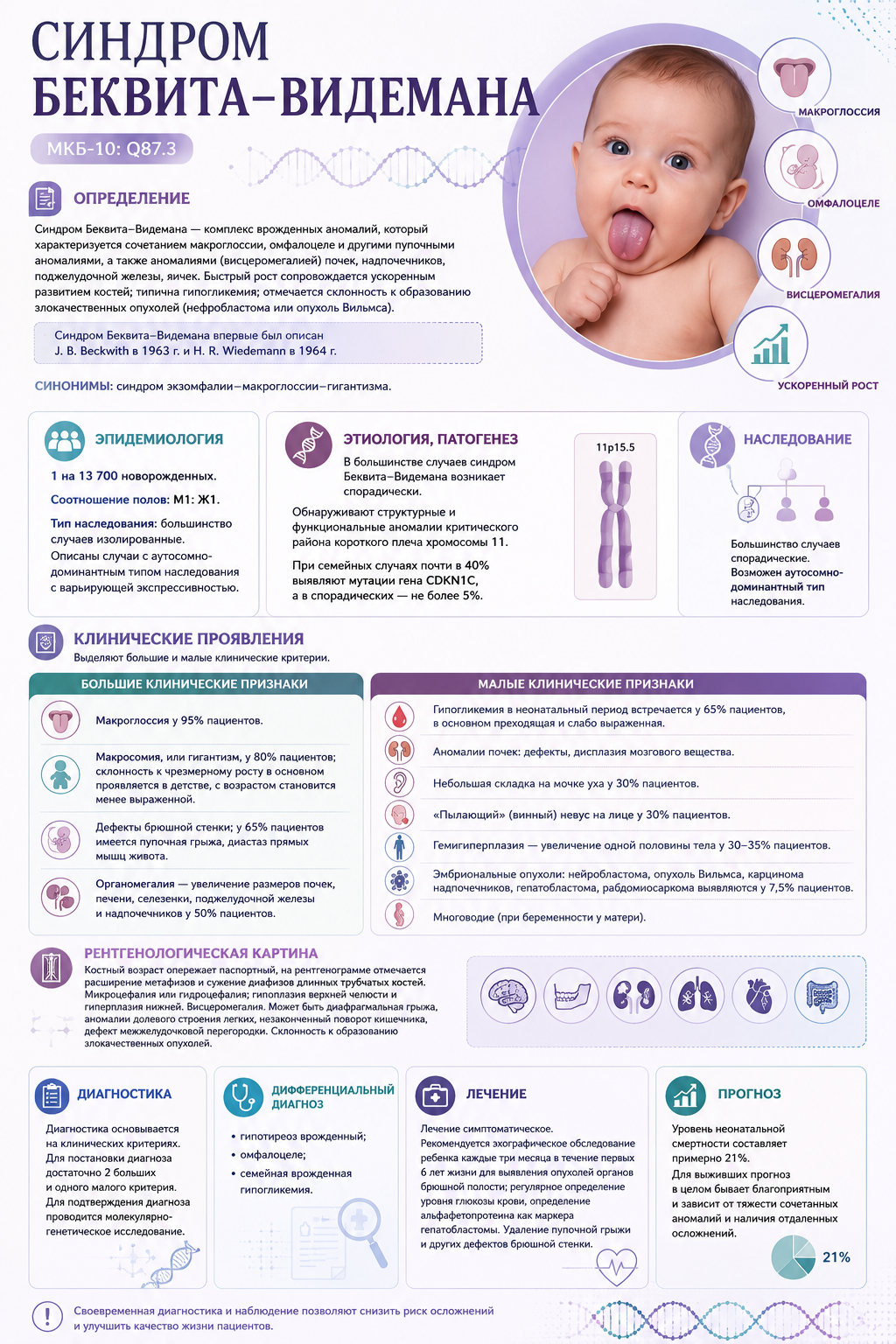
The article is dedicated to Beckwith-Wiedemann syndrome — a rare genetic disorder characterized by congenital anomalies and accelerated growth. The material discusses the causes of the syndrome, clinical manifestations, diagnostic criteria, methods of monitoring, and treatment of patients.
Particular attention is given to signs such as macroglossia, visceromegaly, hypoglycemia, abdominal wall defects, and an increased risk of embryonal tumors. The inheritance patterns, radiological changes, and prognosis of the disease are also described.
The work is presented in a structured format with subsequent adaptation to the client's requirements. An analysis of the initial information was conducted, key semantic blocks were identified, and the material was then reworked into a logically organized and readable format.
During the process, principles of professional editing were applied: eliminating unnecessary information, improving the text's style, and enhancing clarity and perception. The final result is prepared as a ready-to-use material, fully compliant with the project's objectives and suitable for inclusion in a portfolio.
Particular attention is given to signs such as macroglossia, visceromegaly, hypoglycemia, abdominal wall defects, and an increased risk of embryonal tumors. The inheritance patterns, radiological changes, and prognosis of the disease are also described.
The work is presented in a structured format with subsequent adaptation to the client's requirements. An analysis of the initial information was conducted, key semantic blocks were identified, and the material was then reworked into a logically organized and readable format.
During the process, principles of professional editing were applied: eliminating unnecessary information, improving the text's style, and enhancing clarity and perception. The final result is prepared as a ready-to-use material, fully compliant with the project's objectives and suitable for inclusion in a portfolio.

 Андижан
  Available for hire