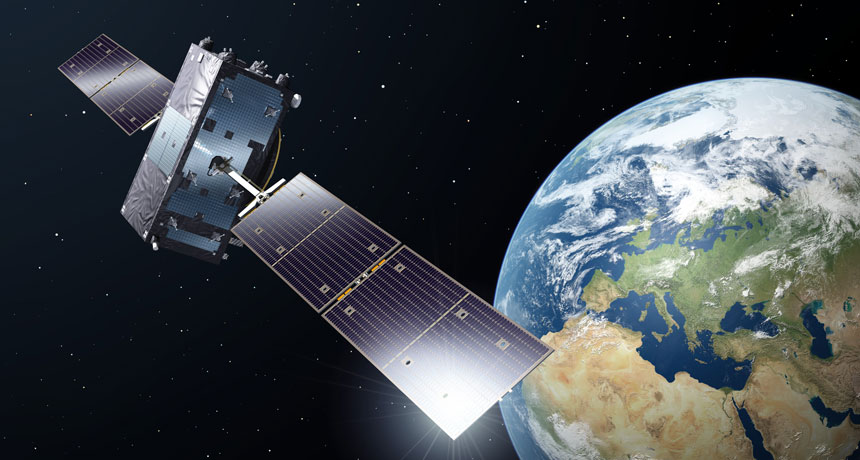
Satellite communications systems.
A satellite is basically a self-contained communications system with
the ability to receive signals from Earth and to retransmit those signals back
with the use of a transponder – an integrated receiver and transmitter of radio
signals. A satellite has to withstand the shock of being accelerated during
launch up to the orbital velocity of 28,100 km (17,500 miles) an hour and a
hostile space environment where it can be subject to radiation and extreme
temperatures for its projected operational life, which can last up to 20 years. In
addition, satellites have to be light, as the cost of launching a satellite is quite
expensive and based on weight. To meet these challenges, satellites must be
small and made of lightweight and durable materials. They must operate at a
very high reliability of more than 99,9 percent in the vacuum of space with
no prospect of maintenance of repair.
The main components of a satellite consist of the communications system,
which includes the antennas and transponders that receive and retransmit
signals, the power system, which includes the solar panels that provide power,
and the propulsion system, which includes the rockets that propel the satellite.
A satellite needs its own propulsion system to get itself to the right orbital
location and to make occasional corrections to that position. A satellite in
geostationary orbit can deviate up to a degree every year from north to south
or east to west of its location because of the gravitational pull of the Moon and
Sun.
A satellite is basically a self-contained communications system with
the ability to receive signals from Earth and to retransmit those signals back
with the use of a transponder – an integrated receiver and transmitter of radio
signals. A satellite has to withstand the shock of being accelerated during
launch up to the orbital velocity of 28,100 km (17,500 miles) an hour and a
hostile space environment where it can be subject to radiation and extreme
temperatures for its projected operational life, which can last up to 20 years. In
addition, satellites have to be light, as the cost of launching a satellite is quite
expensive and based on weight. To meet these challenges, satellites must be
small and made of lightweight and durable materials. They must operate at a
very high reliability of more than 99,9 percent in the vacuum of space with
no prospect of maintenance of repair.
The main components of a satellite consist of the communications system,
which includes the antennas and transponders that receive and retransmit
signals, the power system, which includes the solar panels that provide power,
and the propulsion system, which includes the rockets that propel the satellite.
A satellite needs its own propulsion system to get itself to the right orbital
location and to make occasional corrections to that position. A satellite in
geostationary orbit can deviate up to a degree every year from north to south
or east to west of its location because of the gravitational pull of the Moon and
Sun.