ROAS 867% for the first month for the toy store | Meta ADS
Social Media Advertising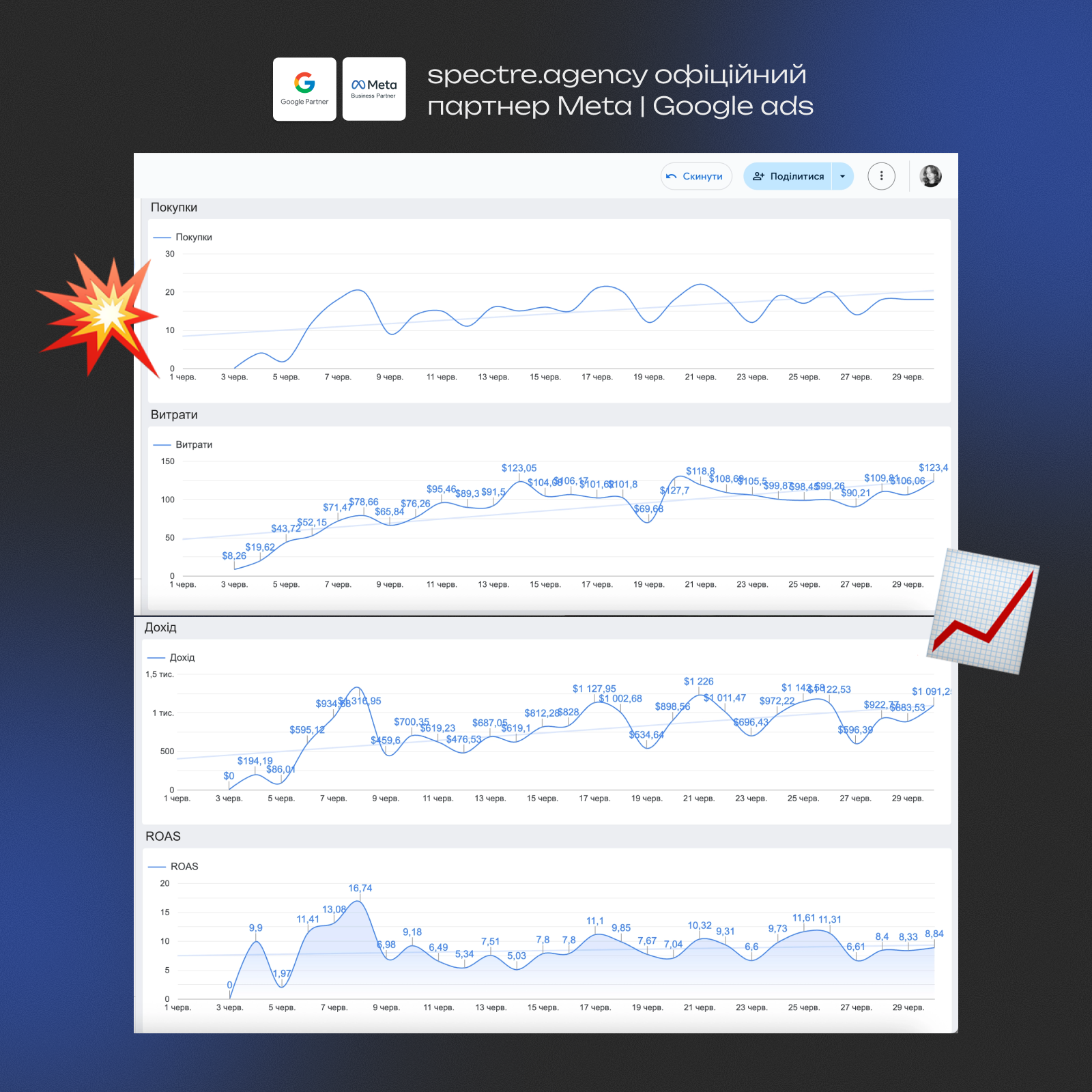
Point A (what the client came with)
Before starting work, the client independently launched ads through a button, primarily using post promotion to maintain page activity. A systematic promotion strategy, working with different stages of the sales funnel, and optimizing advertising campaigns for business goals were absent. As a result, the ads did not utilize their full potential for consistently attracting new customers.
Point B after the first month of work (what we achieved)
- Total revenue (conversion value): $21,558.08
- Advertising budget: $2,486.39
- Number of purchases: 551
- ROAS (return on ad spend): 867%
How did we do it? Launch strategy
Since the client had already been running ads independently, the first step was to conduct an **audit of the ad account**, analyze previous campaigns, and assess the **correctness of the analytics setup**. The main issue was that ads were primarily launched through post promotions, without a clear strategy and optimization for business results.
We set up **Meta Pixel** and tracking of key conversions on the website, allowing Meta's algorithms to optimize advertising campaigns not for reach or clicks, but for **real target actions** of **users**.
After that, we analyzed the assortment, identified **bestselling products**, and started testing advertising campaigns with them, as they already had confirmed demand and the **highest potential** for quick results.
At the same time, we developed a **structure for the ad account** with campaigns divided **by stages of the sales funnel**: separately for attracting new audiences, retargeting, and re-engaging potential customers. This allowed for more effective use of the advertising budget and working with the audience based on their level of interest.
For convenience in analyzing results and continuously monitoring advertising effectiveness, we also prepared an **interactive dashboard** with key metrics, graphs, and trend lines. This enabled the client to track the dynamics of advertising campaigns at any moment, assess their effectiveness, and make decisions based on current data.
The screenshots show the dynamics of changes over the month in the automated Looker report (which we set up for our clients for free, and which automatically pulls data from the account in real-time).
Challenges we faced
**Problem 1: Lack of clear analytics for decision-making**
The client did not have the ability to quickly assess the effectiveness of ads and understand which campaigns or products were yielding the best results. This complicated timely optimization and scaling of the advertising budget.
Solution:
We implemented a system of regular analytics: created an interactive dashboard with key metrics, set up detailed analysis of campaign and product performance. As a result, all decisions regarding budget optimization and scaling were made based on data, not assumptions.
**Problem 2: Uneven effectiveness of different product categories**
During the launch, it became clear that not all products responded equally well to advertising. Some items had low demand, negatively impacting the overall return on the advertising budget.
Solution:
We regularly analyzed the results of each advertising campaign and individual products, gradually reallocating the budget to the most effective items. Ineffective campaigns were either turned off or refined, and the budget was directed toward products with the highest ROAS. This approach increased the overall profitability of advertising and ensured stable scaling of results.
Before starting work, the client independently launched ads through a button, primarily using post promotion to maintain page activity. A systematic promotion strategy, working with different stages of the sales funnel, and optimizing advertising campaigns for business goals were absent. As a result, the ads did not utilize their full potential for consistently attracting new customers.
Point B after the first month of work (what we achieved)
- Total revenue (conversion value): $21,558.08
- Advertising budget: $2,486.39
- Number of purchases: 551
- ROAS (return on ad spend): 867%
How did we do it? Launch strategy
Since the client had already been running ads independently, the first step was to conduct an **audit of the ad account**, analyze previous campaigns, and assess the **correctness of the analytics setup**. The main issue was that ads were primarily launched through post promotions, without a clear strategy and optimization for business results.
We set up **Meta Pixel** and tracking of key conversions on the website, allowing Meta's algorithms to optimize advertising campaigns not for reach or clicks, but for **real target actions** of **users**.
After that, we analyzed the assortment, identified **bestselling products**, and started testing advertising campaigns with them, as they already had confirmed demand and the **highest potential** for quick results.
At the same time, we developed a **structure for the ad account** with campaigns divided **by stages of the sales funnel**: separately for attracting new audiences, retargeting, and re-engaging potential customers. This allowed for more effective use of the advertising budget and working with the audience based on their level of interest.
For convenience in analyzing results and continuously monitoring advertising effectiveness, we also prepared an **interactive dashboard** with key metrics, graphs, and trend lines. This enabled the client to track the dynamics of advertising campaigns at any moment, assess their effectiveness, and make decisions based on current data.
The screenshots show the dynamics of changes over the month in the automated Looker report (which we set up for our clients for free, and which automatically pulls data from the account in real-time).
Challenges we faced
**Problem 1: Lack of clear analytics for decision-making**
The client did not have the ability to quickly assess the effectiveness of ads and understand which campaigns or products were yielding the best results. This complicated timely optimization and scaling of the advertising budget.
Solution:
We implemented a system of regular analytics: created an interactive dashboard with key metrics, set up detailed analysis of campaign and product performance. As a result, all decisions regarding budget optimization and scaling were made based on data, not assumptions.
**Problem 2: Uneven effectiveness of different product categories**
During the launch, it became clear that not all products responded equally well to advertising. Some items had low demand, negatively impacting the overall return on the advertising budget.
Solution:
We regularly analyzed the results of each advertising campaign and individual products, gradually reallocating the budget to the most effective items. Ineffective campaigns were either turned off or refined, and the budget was directed toward products with the highest ROAS. This approach increased the overall profitability of advertising and ensured stable scaling of results.