Slack-Native AI System for Internal Skills Discovery
AI & Machine Learning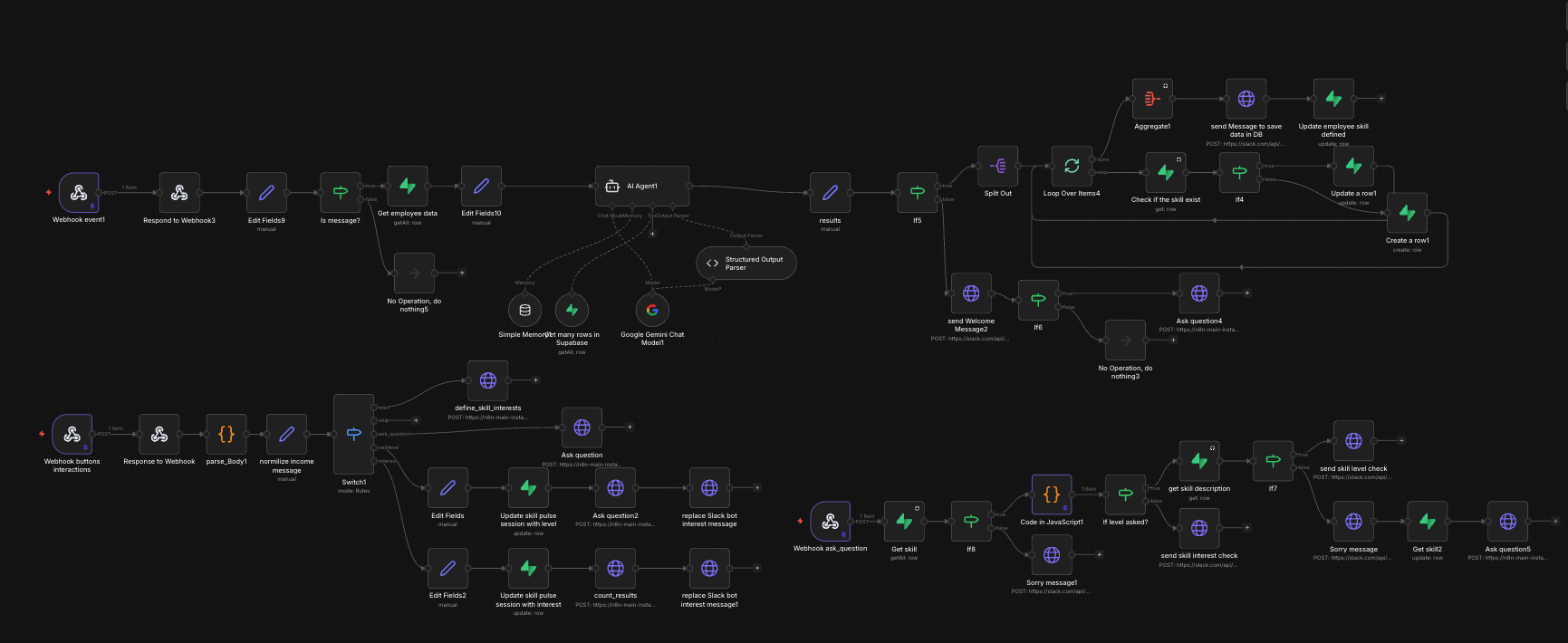
A growing tech company had a recurring staffing problem — not from a lack of talent, but from a lack of visibility into it. Skills existed across the team, but no one could reliably answer:
* Is this person actually using that skill today?
* Are they still motivated by it?
* Has anyone credible confirmed their level?
HR and project leads were making allocation decisions based on outdated profiles and informal 1:1s. The result was avoidable mismatches, missed internal mobility opportunities, and hiring pressure that could have been avoided.
The core issue wasn't missing data — it was missing structure and trust in the data that already existed. I designed a scoring model that captures both proficiency and motivation in a single normalized value (1–9), built on a 3×3 matrix. This gave the company a shared language for skill levels that held consistent meaning across roles and disciplines.
From there, I built SkillPulse — a #Slack -native automation system powered by #N8N, #Supabase, and Google Gemini. Employee context is pulled from PeopleForce — role, position, and existing profile data — so the system starts with a meaningful baseline rather than a blank slate. From there, employees receive lightweight prompts in Slack to rate their skills, one at a time. An AI agent suggests relevant skills based on role context and live data. When someone claims an expert-level rating, a peer validation workflow activates automatically — routing the request only to colleagues already confirmed at that level.
The company now has a live, validated skill map that updates continuously, without adding new platforms or processes. HR and managers can filter by skill, proficiency level, and interest signal — enabling faster staffing decisions and more meaningful growth conversations.
SkillPulse turned scattered self-assessments into a structured, trustworthy talent intelligence layer — built entirely inside the tools the team already used every day.
#Slack #AI #BusinessAnalyst #HR #Slack #ChatBots
* Is this person actually using that skill today?
* Are they still motivated by it?
* Has anyone credible confirmed their level?
HR and project leads were making allocation decisions based on outdated profiles and informal 1:1s. The result was avoidable mismatches, missed internal mobility opportunities, and hiring pressure that could have been avoided.
The core issue wasn't missing data — it was missing structure and trust in the data that already existed. I designed a scoring model that captures both proficiency and motivation in a single normalized value (1–9), built on a 3×3 matrix. This gave the company a shared language for skill levels that held consistent meaning across roles and disciplines.
From there, I built SkillPulse — a #Slack -native automation system powered by #N8N, #Supabase, and Google Gemini. Employee context is pulled from PeopleForce — role, position, and existing profile data — so the system starts with a meaningful baseline rather than a blank slate. From there, employees receive lightweight prompts in Slack to rate their skills, one at a time. An AI agent suggests relevant skills based on role context and live data. When someone claims an expert-level rating, a peer validation workflow activates automatically — routing the request only to colleagues already confirmed at that level.
The company now has a live, validated skill map that updates continuously, without adding new platforms or processes. HR and managers can filter by skill, proficiency level, and interest signal — enabling faster staffing decisions and more meaningful growth conversations.
SkillPulse turned scattered self-assessments into a structured, trustworthy talent intelligence layer — built entirely inside the tools the team already used every day.
#Slack #AI #BusinessAnalyst #HR #Slack #ChatBots