Expert article: "Adaptation to kindergarten without tears."
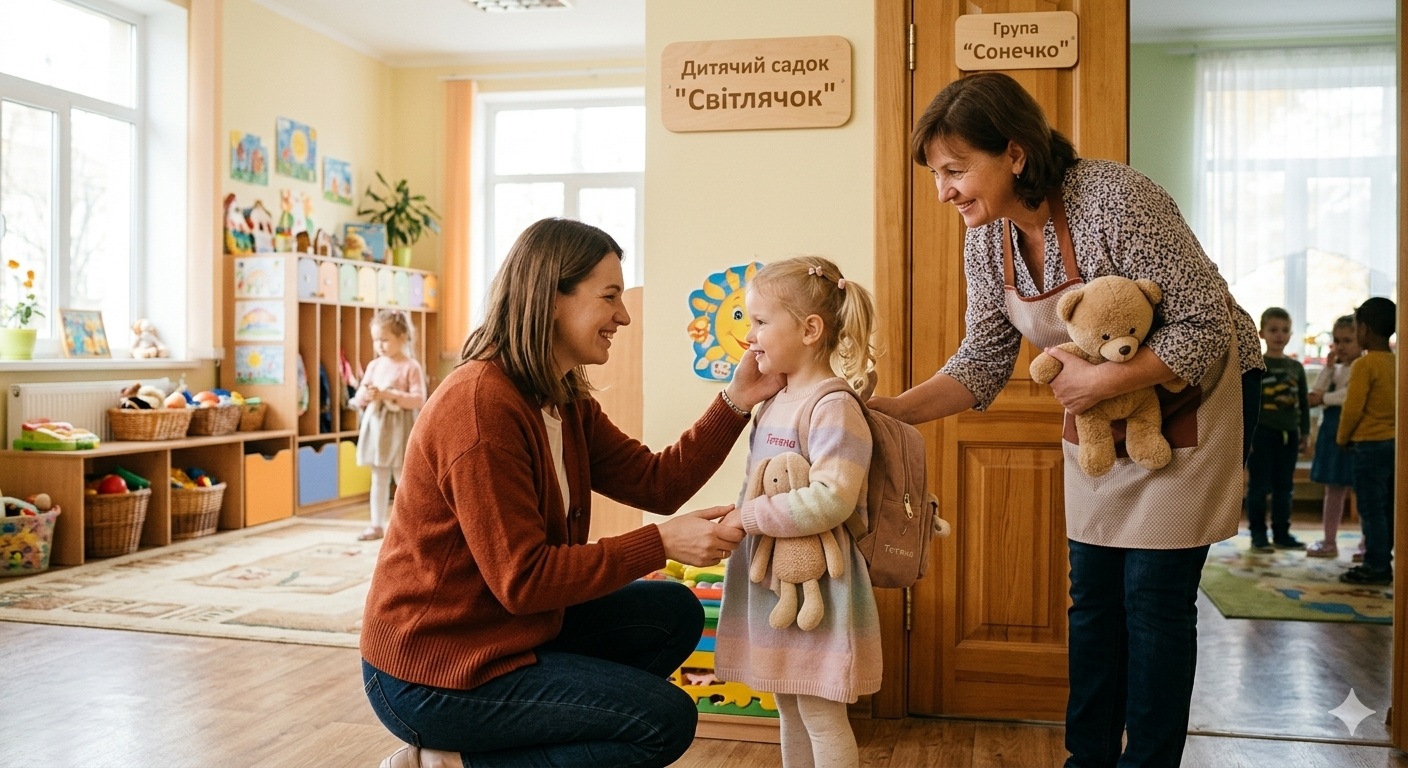
Adaptation to kindergarten without tears: A step-by-step strategy for parents
The first trip to kindergarten is a test not only for the child but also for the parents' nervous system. As an educator, I observe the same picture every year: mothers cry in the hallway, and the little ones in the group feel this stress and subconsciously begin to perceive kindergarten as a place of "exile." But adaptation can be different. It can be gentle if approached as a joint project.
1. Psychological preparation: "Calm mom — calm child"
Preschool children have an incredible level of empathy. They read your state without words. If you are afraid to leave your child, if you do not trust the educator — the child will feel it.
Tip: Two weeks before the start, begin to talk about kindergarten as a "club for little adults." Do not idealize ("it will be super fun"), but do not scare either. Tell the truth: "There are other children, new toys, tasty tea, and a teacher who will help if I am at work."
2. Daily routine — your main ally
The hardest part for children in kindergarten is not separation, but the sudden change in schedule.
Find out the daily schedule in your future group. Start having breakfast, going for walks, and napping according to this schedule right now. When the child's biological clock aligns with the kindergarten's, 50% of the stress will disappear.
3. Self-care skills
A child feels more confident when they are not helpless.
Focus on: Teach your child to hold a spoon, use the potty (or ask to go), and at least partially dress themselves.
Life hack: Buy clothes with Velcro instead of buttons. When the child can put on their shoes by themselves, they will feel like a "hero," which will give them courage in the new group.
4. Farewell ritual: short and with a promise
The longest tears happen at the door, where the mother stands for 20 minutes.
Create a "secret handshake" or a kiss on the palm that the child will "save" until the evening.
The main rule: Never disappear unnoticed while the child is turned away. This creates fear that mom can disappear at any moment. Say goodbye, tell them: "I will come for you after you have lunch/nap" (it is easier for the child to orient themselves by events rather than time) — and go.
5. The role of the educator: become a team
The educator is not a nanny; they are your partner. Share the characteristics of your child: what they like, how to calm them down, which foods they do not eat. The more information the educator has, the faster they will find the key to the child's heart.
Adaptation lasts on average from 2 weeks to 2 months. This is normal. The main thing is your consistency. If you decided to go to kindergarten — go. Your confidence is the best support for the child.
The first trip to kindergarten is a test not only for the child but also for the parents' nervous system. As an educator, I observe the same picture every year: mothers cry in the hallway, and the little ones in the group feel this stress and subconsciously begin to perceive kindergarten as a place of "exile." But adaptation can be different. It can be gentle if approached as a joint project.
1. Psychological preparation: "Calm mom — calm child"
Preschool children have an incredible level of empathy. They read your state without words. If you are afraid to leave your child, if you do not trust the educator — the child will feel it.
Tip: Two weeks before the start, begin to talk about kindergarten as a "club for little adults." Do not idealize ("it will be super fun"), but do not scare either. Tell the truth: "There are other children, new toys, tasty tea, and a teacher who will help if I am at work."
2. Daily routine — your main ally
The hardest part for children in kindergarten is not separation, but the sudden change in schedule.
Find out the daily schedule in your future group. Start having breakfast, going for walks, and napping according to this schedule right now. When the child's biological clock aligns with the kindergarten's, 50% of the stress will disappear.
3. Self-care skills
A child feels more confident when they are not helpless.
Focus on: Teach your child to hold a spoon, use the potty (or ask to go), and at least partially dress themselves.
Life hack: Buy clothes with Velcro instead of buttons. When the child can put on their shoes by themselves, they will feel like a "hero," which will give them courage in the new group.
4. Farewell ritual: short and with a promise
The longest tears happen at the door, where the mother stands for 20 minutes.
Create a "secret handshake" or a kiss on the palm that the child will "save" until the evening.
The main rule: Never disappear unnoticed while the child is turned away. This creates fear that mom can disappear at any moment. Say goodbye, tell them: "I will come for you after you have lunch/nap" (it is easier for the child to orient themselves by events rather than time) — and go.
5. The role of the educator: become a team
The educator is not a nanny; they are your partner. Share the characteristics of your child: what they like, how to calm them down, which foods they do not eat. The more information the educator has, the faster they will find the key to the child's heart.
Adaptation lasts on average from 2 weeks to 2 months. This is normal. The main thing is your consistency. If you decided to go to kindergarten — go. Your confidence is the best support for the child.

 Krivoi Rog
  Available for hire