Financial model and unit economics of the Fintech project BNPL
Enterprise Resource Planning (ERP) 100 USD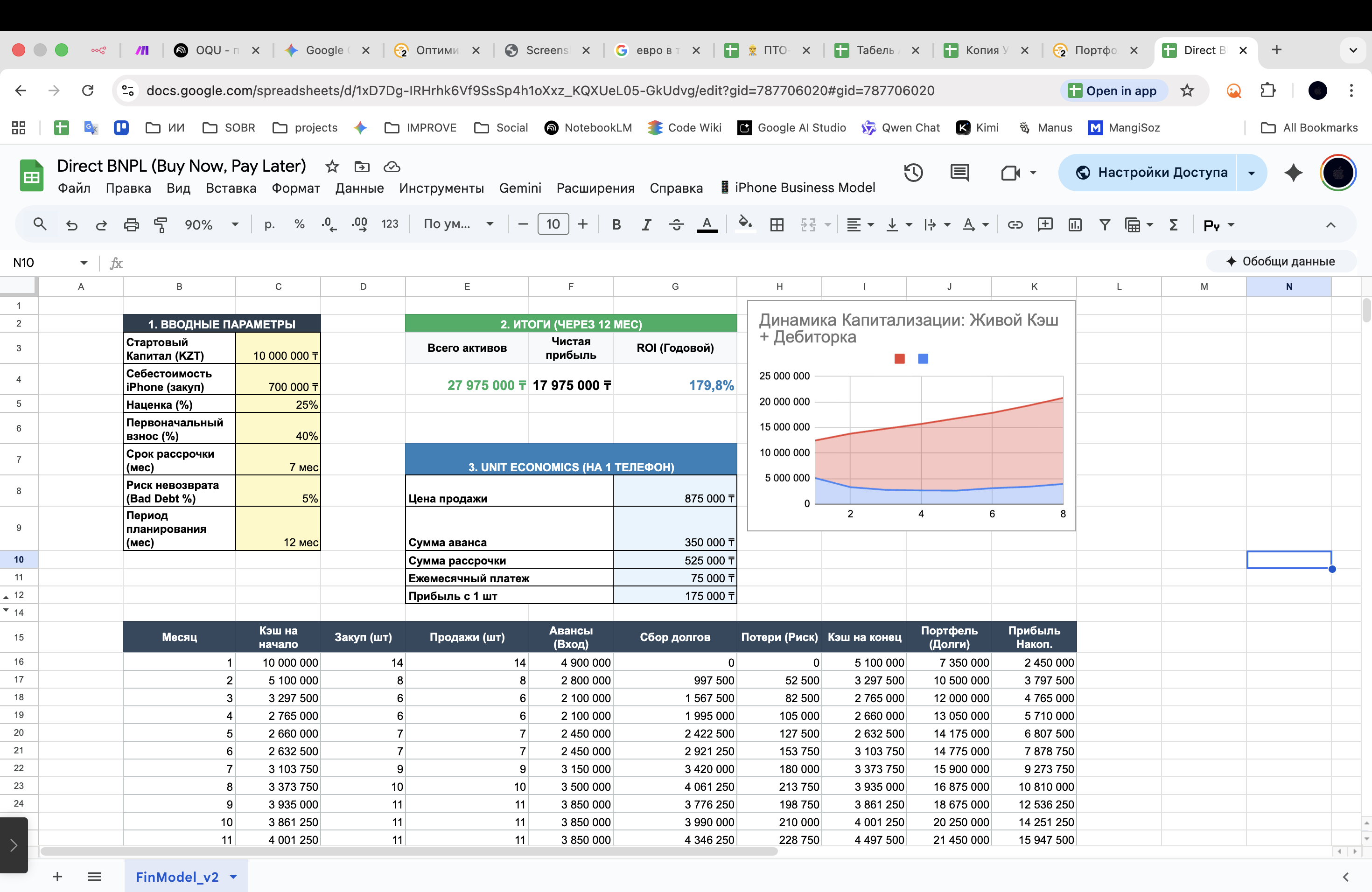
Development of a detailed investment model for launching a business selling devices (iPhone) on an installment basis using the BNPL (Buy Now, Pay Later) model. The model allows for forecasting profitability, assessing the risks of defaults, and calculating the necessary working capital for 12 months.
What is implemented in the model:
Unit economics: Calculation of profitability from each sold device considering the purchase price, markup, and initial payment.
Cash Flow Forecast: Forecast of cash flow for the year ahead, taking into account the reinvestment of profits into the purchase of new goods.
Risk Management: The model includes a Bad Debt ratio (default risk of 5%), which allows for seeing real, not paper, profit.
Portfolio analysis: Calculation of the growth of accounts receivable ("debt portfolio") and its liquidity.
Investment indicators: Automatic calculation of ROI (179.8% per annum) and net profit with a specified starting capital (10 million ₸).
Technical stack:
Financial modeling: Building complex dependencies between inventory turnover and accounts receivable recovery.
Google Sheets / Excel: Use of forecasting formulas and scenario analysis.
Result: A ready business plan with clear answers to the questions:
What amount will be "stuck" in customer debts after a year?
How many iPhones need to be sold per month to double the capital?
What payment shortfall can the business withstand before a cash gap occurs?
What is implemented in the model:
Unit economics: Calculation of profitability from each sold device considering the purchase price, markup, and initial payment.
Cash Flow Forecast: Forecast of cash flow for the year ahead, taking into account the reinvestment of profits into the purchase of new goods.
Risk Management: The model includes a Bad Debt ratio (default risk of 5%), which allows for seeing real, not paper, profit.
Portfolio analysis: Calculation of the growth of accounts receivable ("debt portfolio") and its liquidity.
Investment indicators: Automatic calculation of ROI (179.8% per annum) and net profit with a specified starting capital (10 million ₸).
Technical stack:
Financial modeling: Building complex dependencies between inventory turnover and accounts receivable recovery.
Google Sheets / Excel: Use of forecasting formulas and scenario analysis.
Result: A ready business plan with clear answers to the questions:
What amount will be "stuck" in customer debts after a year?
How many iPhones need to be sold per month to double the capital?
What payment shortfall can the business withstand before a cash gap occurs?