Task
The company was working with CRM Creatio, but for a small team of 3-4 managers, the system seemed too complex and overloaded. The lack of a clear sales funnel, a confusing interface with unnecessary fields, and the absence of simple dashboards led to managers avoiding work in the CRM, while management did not receive timely analytics on leads, engagement channels, and sales department effectiveness.
Solution
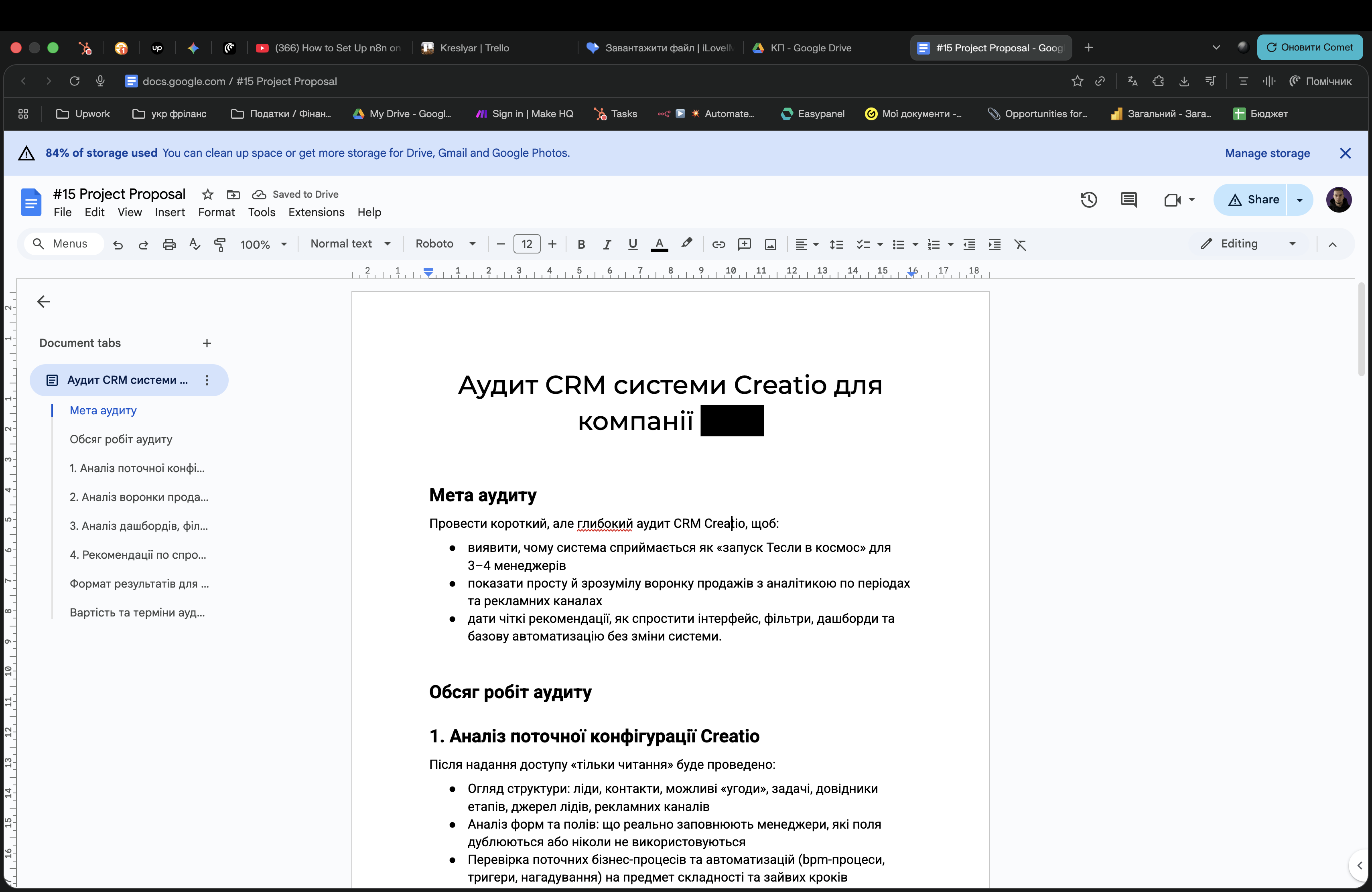
A comprehensive audit of the current Creatio configuration was conducted in four areas:
1. Structure and interface analysis: forms, fields, directories were reviewed, data duplication and unused elements were identified. A "what to keep / hide / redo" table was prepared to simplify daily work.
2. Sales funnel: the actual path of a lead from the first contact to the deal was tracked, the recording of sources (advertising, website forms, calls) was analyzed, and "gaps" in the data were identified where information was lost or stages were not recorded.
3. Dashboards and reporting: the current analytics capabilities of Creatio were checked, it was proposed to replace complex manual filters with ready-made views and add key dashboards (funnel over a period, leads by channels, manager effectiveness, contact statistics).
4. Recommendations for simplification and automation: a step-by-step change plan was formed with prioritization, including the use of basic automations (reminders, lead distribution, auto-tasks) and AI functions of Creatio (scoring, prioritization).
Result
The company received a detailed audit document with a visualization of the current and future funnel, specific recommendations for simplifying the interface, and a list of tasks for implementation. Management understood what changes needed to be made for the CRM to stop being an obstacle and to transform into a working tool with transparent analytics. Managers received a clear picture of their daily tasks without unnecessary fields and clicks, while the manager received dashboards with key metrics of the funnel, conversions, and team effectiveness.
In numbers
- 4 areas of audit: structure, funnel, analytics, automation.
- 10-15 pages of detailed report with recommendations and visualization of the "was / will be" funnel.
- 5-7 slides of presentation for quick discussion with management.
- Up to 50% reduction in interface complexity due to hiding unused fields and simplifying filters.
- 3-5 ready-made dashboards for daily monitoring of key sales metrics and manager performance.
The company was working with CRM Creatio, but for a small team of 3-4 managers, the system seemed too complex and overloaded. The lack of a clear sales funnel, a confusing interface with unnecessary fields, and the absence of simple dashboards led to managers avoiding work in the CRM, while management did not receive timely analytics on leads, engagement channels, and sales department effectiveness.
Solution
A comprehensive audit of the current Creatio configuration was conducted in four areas:
1. Structure and interface analysis: forms, fields, directories were reviewed, data duplication and unused elements were identified. A "what to keep / hide / redo" table was prepared to simplify daily work.
2. Sales funnel: the actual path of a lead from the first contact to the deal was tracked, the recording of sources (advertising, website forms, calls) was analyzed, and "gaps" in the data were identified where information was lost or stages were not recorded.
3. Dashboards and reporting: the current analytics capabilities of Creatio were checked, it was proposed to replace complex manual filters with ready-made views and add key dashboards (funnel over a period, leads by channels, manager effectiveness, contact statistics).
4. Recommendations for simplification and automation: a step-by-step change plan was formed with prioritization, including the use of basic automations (reminders, lead distribution, auto-tasks) and AI functions of Creatio (scoring, prioritization).
Result
The company received a detailed audit document with a visualization of the current and future funnel, specific recommendations for simplifying the interface, and a list of tasks for implementation. Management understood what changes needed to be made for the CRM to stop being an obstacle and to transform into a working tool with transparent analytics. Managers received a clear picture of their daily tasks without unnecessary fields and clicks, while the manager received dashboards with key metrics of the funnel, conversions, and team effectiveness.
In numbers
- 4 areas of audit: structure, funnel, analytics, automation.
- 10-15 pages of detailed report with recommendations and visualization of the "was / will be" funnel.
- 5-7 slides of presentation for quick discussion with management.
- Up to 50% reduction in interface complexity due to hiding unused fields and simplifying filters.
- 3-5 ready-made dashboards for daily monitoring of key sales metrics and manager performance.