Brand positioning of the personal growth school
Consulting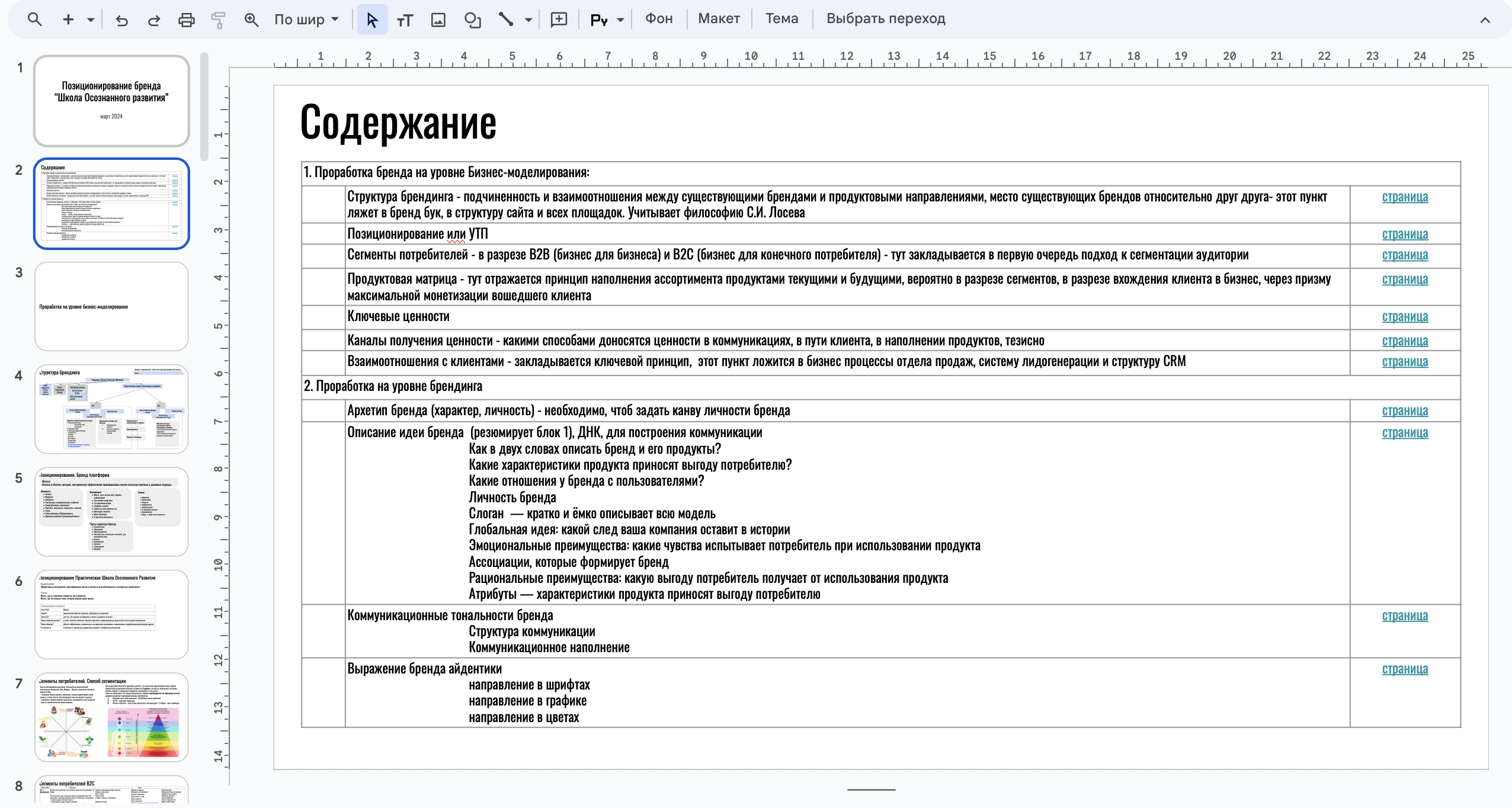
Client:
Investors in an existing educational project with the author of development methodologies are carrying out strategic and operational management.
Problem: The author of the methodologies has developed his brand "by intuition," and the lack of clear positioning leads to limitations in promotion. Sales have been affected by the withdrawal from the Russian market. They plan to scale up - to create an educational project where there will be more than one author and speaker. A structure of relationships with the current author and positioning of the new project is necessary.
Solution:
1. Development of the brand at the level of Business Modeling:
1.1. Branding structure - subordination and relationships between existing brands and product lines, the place of existing brands relative to each other - this point will be included in the brand book, in the structure of the website and all platforms.
1.2. Positioning or Unique Selling Proposition (USP)
1.3. Consumer segments - in terms of B2B (business to business) and B2C (business to consumer) - this primarily lays the groundwork for audience segmentation.
1.4. Product matrix - this reflects the principle of filling the assortment with current and future products, likely in terms of segments, in terms of customer entry into the business, through the lens of maximum monetization of the incoming customer.
1.5. Key values
1.6. Channels of value delivery - the ways in which values are communicated, in the customer journey, in product filling, in brief.
1.7. Customer relationships - the key principle is laid down, this point is integrated into the business processes of the sales department, lead generation system, and CRM structure.
2. Development at the branding level
2.1. Description of the brand idea (summarizes block 1), DNA, for building communication
- How to describe the brand and its products in two words?
- What product characteristics bring benefits to the consumer?
- What is the brand's relationship with users?
- Brand personality
- Slogan - briefly and concisely describes the entire model
- Global idea: what legacy will your company leave in history
- Emotional benefits: what feelings does the consumer experience when using the product
- Associations formed by the brand
- Rational benefits: what advantage does the consumer gain from using the product
- Attributes - characteristics of the product that bring benefits to the consumer
2.2. Brand archetype (character, personality) - necessary to set the framework for the brand's personality
2.3. Brand communication tones
- Communication structure - the architecture of information delivery on all platforms is built
- Communication content
- Expression of brand identity (essentially a brief for the development of the brand book)
Investors in an existing educational project with the author of development methodologies are carrying out strategic and operational management.
Problem: The author of the methodologies has developed his brand "by intuition," and the lack of clear positioning leads to limitations in promotion. Sales have been affected by the withdrawal from the Russian market. They plan to scale up - to create an educational project where there will be more than one author and speaker. A structure of relationships with the current author and positioning of the new project is necessary.
Solution:
1. Development of the brand at the level of Business Modeling:
1.1. Branding structure - subordination and relationships between existing brands and product lines, the place of existing brands relative to each other - this point will be included in the brand book, in the structure of the website and all platforms.
1.2. Positioning or Unique Selling Proposition (USP)
1.3. Consumer segments - in terms of B2B (business to business) and B2C (business to consumer) - this primarily lays the groundwork for audience segmentation.
1.4. Product matrix - this reflects the principle of filling the assortment with current and future products, likely in terms of segments, in terms of customer entry into the business, through the lens of maximum monetization of the incoming customer.
1.5. Key values
1.6. Channels of value delivery - the ways in which values are communicated, in the customer journey, in product filling, in brief.
1.7. Customer relationships - the key principle is laid down, this point is integrated into the business processes of the sales department, lead generation system, and CRM structure.
2. Development at the branding level
2.1. Description of the brand idea (summarizes block 1), DNA, for building communication
- How to describe the brand and its products in two words?
- What product characteristics bring benefits to the consumer?
- What is the brand's relationship with users?
- Brand personality
- Slogan - briefly and concisely describes the entire model
- Global idea: what legacy will your company leave in history
- Emotional benefits: what feelings does the consumer experience when using the product
- Associations formed by the brand
- Rational benefits: what advantage does the consumer gain from using the product
- Attributes - characteristics of the product that bring benefits to the consumer
2.2. Brand archetype (character, personality) - necessary to set the framework for the brand's personality
2.3. Brand communication tones
- Communication structure - the architecture of information delivery on all platforms is built
- Communication content
- Expression of brand identity (essentially a brief for the development of the brand book)