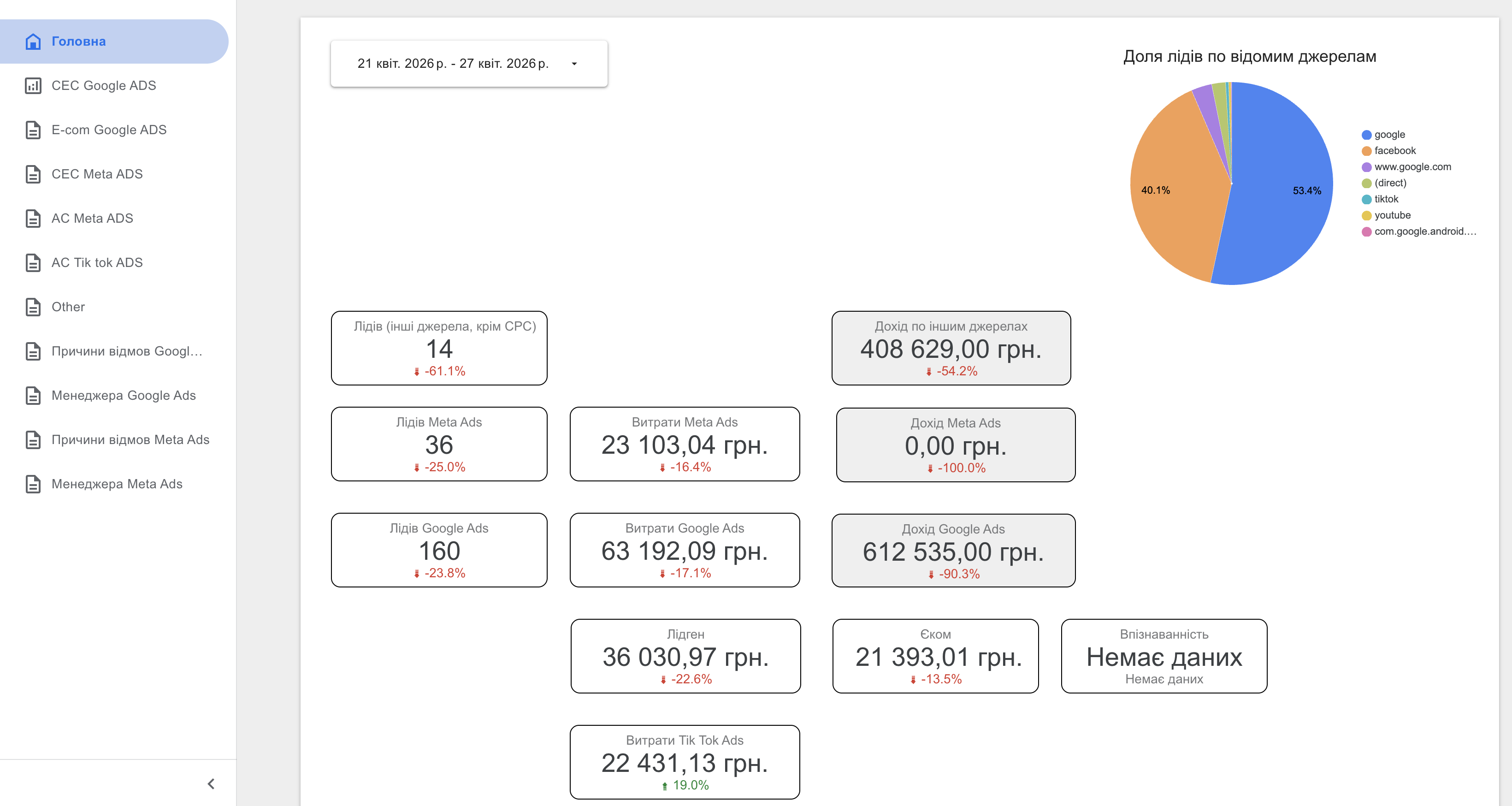
As part of the project, we fully built and implemented a comprehensive analytics system that allows tracking the entire customer journey — from the first contact to actual revenue.
---
What has been implemented
1. Implementation of Google Tag Manager (GTM)
* A centralized tag management system has been built
* Events configured for all key user actions:
* page views
* button clicks
* form submissions
* calls
* interactions with website elements
* A flexible system for further scaling and adding new events
---
2. Configuration of Google Analytics 4 (GA4)
* Complete GA4 configuration for business objectives
* Construction of event structure (event-based tracking)
* Definition and configuration of key conversions:
* applications
* calls
* target actions
* Tracking user behavior on the website
* Analysis of traffic channels and their effectiveness
---
3. Integration with advertising accounts
* Transfer of conversions to Google Ads
* Transfer of events to Meta Ads
* Data synchronization for optimizing advertising campaigns
* Building correct attribution
---
4. Tracking lead sources
* Identification of traffic sources:
* Google Ads
* Meta Ads
* TikTok
* organic traffic
* direct visits
* Distribution of leads by channels
* Analysis of the effectiveness of each source
---
5. Building reporting (Looker Studio)
* Development of a custom dashboard
* Visualization of key metrics:
* number of leads
* expenses by channels
* revenue
* CPL / CPA
* ROAS
* Aggregation of data from various sources in one interface
* Ability for real-time analysis
---
6. Linking “marketing → sales → revenue”
* Logic for data transfer from advertising to actual results has been built
* Consideration of application statuses
* Analysis of lead quality
* Assessment of actual revenue by channels
---
Result
* Complete transparency of marketing processes
* Understanding which channel brings not just leads, but money
* Ability to optimize advertising based on real data
* Increased effectiveness of marketing investments
* Building a systematic approach to scaling
---
Conclusion
The configured comprehensive analytics system allows for decision-making based not on intuition, but on accurate data, which is critically important for the stable growth of the project.
---
What has been implemented
1. Implementation of Google Tag Manager (GTM)
* A centralized tag management system has been built
* Events configured for all key user actions:
* page views
* button clicks
* form submissions
* calls
* interactions with website elements
* A flexible system for further scaling and adding new events
---
2. Configuration of Google Analytics 4 (GA4)
* Complete GA4 configuration for business objectives
* Construction of event structure (event-based tracking)
* Definition and configuration of key conversions:
* applications
* calls
* target actions
* Tracking user behavior on the website
* Analysis of traffic channels and their effectiveness
---
3. Integration with advertising accounts
* Transfer of conversions to Google Ads
* Transfer of events to Meta Ads
* Data synchronization for optimizing advertising campaigns
* Building correct attribution
---
4. Tracking lead sources
* Identification of traffic sources:
* Google Ads
* Meta Ads
* TikTok
* organic traffic
* direct visits
* Distribution of leads by channels
* Analysis of the effectiveness of each source
---
5. Building reporting (Looker Studio)
* Development of a custom dashboard
* Visualization of key metrics:
* number of leads
* expenses by channels
* revenue
* CPL / CPA
* ROAS
* Aggregation of data from various sources in one interface
* Ability for real-time analysis
---
6. Linking “marketing → sales → revenue”
* Logic for data transfer from advertising to actual results has been built
* Consideration of application statuses
* Analysis of lead quality
* Assessment of actual revenue by channels
---
Result
* Complete transparency of marketing processes
* Understanding which channel brings not just leads, but money
* Ability to optimize advertising based on real data
* Increased effectiveness of marketing investments
* Building a systematic approach to scaling
---
Conclusion
The configured comprehensive analytics system allows for decision-making based not on intuition, but on accurate data, which is critically important for the stable growth of the project.