AI и машинное обучение
96-
НейроЛабиринт — платформа параллельного обучения агентов
AI и машинное обучение
Это высокопроизводительная система обучения с подкреплением, построенная вокруг многoагентной среды Maze RL, оптимизированная под реальные вычислительные нагрузки и масштабирование.
Проект реализует полностью векторизованную симуляцию, где одновременно обучаются десятки агентов в одной и той же среде. Архитектура специально спроектирована так, чтобы уходить от классического single-agent подхода и заменять его на параллельное обучение с общей средой, что радикально увеличивает эффективность использования вычислительных ресурсов.
… Каждый агент работает независимо, но в рамках единой среды, что позволяет моделировать конкурентное и коллективное поведение одновременно. Система поддерживает батчевую обработку наблюдений и действий, где все агенты проходят forward pass одной операцией, без N отдельных вызовов модели. Это даёт существенный прирост производительности и делает систему пригодной для масштабирования до сотен агентов.
Среда построена на процедурной генерации сложных лабиринтов с контролируемой структурной энтропией: циклы, ловушки, тупики, ложные пути и узкие коридоры. Это создаёт богатое пространство для обучения, где агент не может полагаться на тривиальные стратегии и вынужден формировать устойчивую политику навигации.
Система поддерживает динамическую визуализацию на Pygame, где одновременно отображаются все агенты в реальном времени, включая их позиции, прогресс и агрегированную статистику обучения. При необходимости визуализация отключается, и система переходит в высокоскоростной headless режим, достигая тысяч агент-steps в секунду на CPU.
Обучение построено на DQN-архитектуре с replay buffer, target network и epsilon decay, адаптированными под многoагентный режим. Вместо классического эпизодического цикла используется потоковый шаговый тренинг, где обновления модели происходят непрерывно по мере поступления опыта от всех агентов.
В результате получается система, которая одновременно является исследовательской платформой и инженерным инструментом: она демонстрирует поведение сложных RL-агентов в условиях плотной параллелизации, позволяет тестировать стратегии масштабирования и визуально наблюдать коллективное обучение в реальном времени.
По сути это не просто тренажёр агента, а полноценная среда для разработки и стресс-тестирования алгоритмов обучения с подкреплением в мультиагентных сценариях с высокой плотностью взаимодействия.
-
Искусственный Интеллект Контентный Двигатель — 30 Постов за $1
AI и машинное обучениеПолная замкнутая система контента, которая пишет в голосе бренда, 6 связанных сценариев Make.com: ЗАГРУЗКА: загружает голос бренда, болевые точки аудитории, векторы в Pinecone ГЕНЕРАЦИЯ: запрашивает RAG векторы, структурированный запрос к Claude, 6 вариантов черновиков ИНТЕГРАЦИЯ WEBHOOKS: унифицированный конвейер, который можно активировать из форм Slack или других сценариев ПУБЛИКАЦИЯ: отправляет утвержденный вариант в LinkedIn и X через Buffer ЦИКЛ ОБРАТНОЙ СВЯЗИ: собирает метрики вовлеченности, автоматически добавляет лучшие посты обратно в Pinecone в качестве стильовых ссылок ПРОВЕРКА REDDIT: отслеживает сабреддиты на наличие свежих болевых точек аудитории, автоматически обновляет язык аудитории
https://www.loom.com/share/3e08552f874f407bad4b558bd0bdf9d8
… #make.com #pinecone #claude #promptengineering #Buffer
-
Голосовой AI-агент для риелторского агентства (RAG)
AI и машинное обучениеПостроил RAG-пайплайн для агента, который автономно звонил клиентам и консультировал их. Основная сложность -- оценка и ранжирование извлеченных чанков в контексте живого звонка: реализовал перезапись запроса, гибридный поиск (ключевое слово + вектор), повторное ранжирование по релевантности. Настроил embedding-модель на корпусе документов о объектах недвижимости. Агент эскалировал граничные кейсы через HITL.
-
Аі мейкер обкладинок для песен
AI и машинное обучение
(Пинтерест → Stable Diffusion XL + LoRA (Gradio UI))
Инструмент для генерации обложек для музыкальных релизов, который упрощает путь от визуального вдохновения до готового дизайна. Решение сочетает референсные изображения из Пинтереста со Stable Diffusion XL и LoRA в удобном веб-интерфейсе на базе Gradio.
… Разработано для музыкального исполнителя: позволяет быстро находить визуальные референсы, адаптировать стиль и генерировать уникальные обложки с помощью подхода image-to-image на локальном diffusion-пайплайне.
-
AI Assistant for ServiceFusion: Query Jobs by Chat, Not Clicks
AI и машинное обучение
The Situation
A field service operator running on ServiceFusion wanted dispatchers and office staff to stop clicking through menus every time they needed to check a customer's job history, pull open estimates, or see which technician was assigned to a job. The team was already using Claude for other tasks. The obvious next step: let Claude talk directly to ServiceFusion.
The Problem
… ServiceFusion exposes a REST API, but AI assistants cannot call it directly. The Model Context Protocol (MCP) is the emerging standard for giving AI clients structured access to external tools, and no MCP server existed for ServiceFusion. Building one correctly meant solving three problems at once:
OAuth2 token lifecycle. ServiceFusion uses short-lived access tokens that expire and must be refreshed transparently, so the AI never hits an auth failure mid-conversation.
Multi-tenancy. A single server instance had to isolate credentials and API calls for multiple companies, each with their own ServiceFusion account.
Self-service onboarding. The operator did not want to configure every new tenant manually.
The Solution
I built a multi-tenant MCP server in Node.js and TypeScript that sits between AI clients (Claude, Cursor, ChatGPT) and ServiceFusion. It exposes 13 structured tools covering the core entities dispatchers actually use: customers, jobs, estimates, technicians, and equipment.
The server handles two independent OAuth2 layers. One authenticates incoming AI clients to the MCP server. The second manages the server's own ServiceFusion tokens, including automatic refresh with a concurrency lock so simultaneous requests never trigger duplicate refreshes.
All sensitive credentials (client IDs, secrets, tokens) are encrypted at rest with AES-256-GCM in Supabase PostgreSQL. New tenants self-register via REST API, confirm via OTP, and supply their ServiceFusion credentials to activate. No manual operator work per signup.
A lightweight admin panel lets the operator view usage per tenant, adjust rate limits, and activate or deactivate accounts.
Tech Stack: Node.js 20, TypeScript, @ modelcontextprotocol/sdk, Express, Supabase (PostgreSQL), AES-256-GCM encryption, Zod, Winston, Docker, nginx, Let's Encrypt
The Results
13 MCP tools live across customers, jobs, estimates, technicians, and equipment
Zero manual setup per tenant. Self-service OTP registration and activation flow
Transparent OAuth2. Expired tokens refresh automatically with race-condition protection
Per-tenant rate limits (free, pro, enterprise tiers) enforced at the request layer
Full usage tracking (tool name, endpoint, status code, response time) logged per tenant for billing and analytics
Deployed to production on Hetzner VPS behind nginx with SSL, coexisting with a sibling MCP server on the same host
How It Works
1. Tenant POSTs to /api/register with company name and email, receives a 6-digit OTP
2. Tenant confirms via /api/confirm, then activates by supplying ServiceFusion OAuth credentials
3. Credentials are encrypted with AES-256-GCM and stored in Supabase
4. AI client (Claude, Cursor) calls /mcp with a bearer token; middleware identifies the tenant and checks rate limit
5. On tool invocation, the server checks token validity and refreshes automatically if expired
6. Structured response flows back to the AI client, and the call is logged for usage analytics
-
Automated FL Tax Deed Auction Research: Hours of Work, Zero Clic
AI и машинное обучение
Automated FL Tax Deed Auction Research: Hours of Work, Zero Clicks
The Situation
Florida tax deed auctions list dozens to hundreds of properties per auction day across multiple counties. A serious bidder has to vet each parcel before the auction: acreage, zoning, flood risk, road access, assessed value, aerial view. The research lives across six different county property appraiser portals, FEMA flood maps, Google Maps satellite, Street View, and parcel boundary services like id.land. Each county has its own quirky SPA. Each data point lives in a different tab.
… The Problem
Manual research on auction day runs four to six hours for a single county's list. Multiply by six counties and the math breaks: bidders either skip parcels, miss flood risk signals, or bid blind. The tedium is the real cost. An experienced investor should be filtering and analyzing, not copy-pasting parcel IDs into six different forms.
The target operator is sophisticated enough to self-host and wants full control over their data, API keys, and scraping infrastructure. No SaaS lock-in, no per-seat fees, no sending proprietary investment logic to a vendor.
The Solution
I built a self-hosted intelligence platform that turns hours of manual county-portal research into an overnight pipeline run. The operator triggers one run, walks away, and wakes up to a filterable shortlist of auction parcels ranked by AI verdict.
How the pipeline works (7 stages, event-driven):
1. Scrape listings from realtaxdeed.com behind a Surfshark VPN (the site blocks non-US IPs and non-browser user agents). Handles a multi-step login with up to 5 sequential notice pages, paginates through all auction items.
2. Scrape property data from each county's appraiser portal. Putnam County alone required splitting parcel IDs like 01-10-26-0250-0270-0081 into 6 separate form fields inside an SPA.
3. Resolve GPS coordinates via id.land, dismissing modals and navigating state/county/parcel dropdowns.
4. Capture screenshots: Google Maps satellite, Street View, id.land parcel boundary, FEMA flood zone.
5. Check FEMA flood zone using an undocumented ArcGIS &extent= URL parameter (replaced a brittle UI-search automation flow).
6. Run AI analysis via Claude Sonnet 4 with tool_use for structured output: numeric subscores (land quality, flood risk, road access, development, value), overall 0-100 score, flags, reasoning, and a buy/review/skip verdict.
7. Write results to Supabase, pushed live to a React dashboard via Realtime subscriptions.
Tech Stack: NestJS, Playwright, BullMQ, Redis, Supabase (PostgreSQL + Storage + Realtime), Claude Sonnet 4 API, React, Vite, Tailwind, Leaflet, Docker Compose, Caddy, Surfshark VPN via gluetun.
The Results
- Hours of manual cross-portal research replaced with a single pipeline trigger
- End-to-end pipeline working for Putnam County: 10/10 parcels scraped, 10/10 GPS resolved, 40 screenshots captured per run
- AI cost calibrated at approximately $0.012 per parcel for full vision analysis
- 6-county configuration system lets new counties drop in via config files plus a processor strategy
- Self-hosted architecture keeps all data, API keys, and scraping infrastructure under operator control
- Real-time dashboard shows pipeline runs, parcel details, queue health, AI verdicts, CSV export, interactive map
How It Works (operator view)
1. Operator hits "Trigger Pipeline" in the dashboard (or POSTs to the API)
2. System scrapes the auction listing page, creates a parcel record per item
3. Each parcel flows through all 7 stages automatically
4. Dashboard updates live as parcels complete each stage
5. When AI analysis finishes, operator sees a ranked, filterable list with verdicts
6. Export to CSV or drill into parcel detail with all screenshots side-by-side
-
3M+ Deed Records Processed: Property Research from Days to Minut
AI и машинное обучение
The Situation
A US-based legal-tech founder was building a property research platform for real estate attorneys: lawyers who hunt for undervalued land parcels as investment opportunities for their clients. Their work depends on finding specific language buried inside deed records such as easements, restrictions, access rights, and boundary clauses.
Before this project, finding the right parcels meant manually searching DataTree and county databases, reading individual deed PDFs, and cross-referencing with tax maps, zoning data, and demographics across separate tabs. A single qualified lead could take days. Some questions couldn't be answered at all.
…
The Problem
Attorneys were missing deals because the research cost was too high. Every property had to be hand-checked against keyword criteria, then enriched with geo data and infrastructure records from four different sources. The founder had tried manual workarounds and off-the-shelf tools. Nothing connected the sources. Nothing filtered by the specific legal language his clients needed to find.
The question wasn't "can we make this faster?" It was "can we make questions answerable that weren't answerable before?"
The Solution
I built an end-to-end property intelligence platform with two layers.
The frontend is a React SPA deployed on Vercel where attorneys search, filter, and review properties. Each result opens into a detail view with deed history, lot-size restrictions, tax maps, infrastructure, and county demographics, all rendered dynamically from a Supabase backend with row-level security.
The backend is n8n-as-API. Rather than running n8n as "automation glue," I used it as the production API layer for the deed-processing pipeline. When an attorney runs a keyword search, the request routes through a Supabase Edge Function to n8n webhooks. The pipeline fetches deed records from DataTree, filters by legal keywords, enriches matches with Zonomics geo data, runs AI analysis via Claude (OpenRouter), and writes progress back to Supabase in real time. Attorneys see staged progress as records are matched and enriched.
This architecture gave the founder a backend that's fully controllable, easy to modify, and fast to extend: new data sources or analysis steps ship in hours, not sprints. To support that velocity, I built a custom Claude Code toolkit that manages n8n workflows programmatically (creating, syncing, and debugging them from natural-language specs).
Tech Stack: n8n, Supabase (PostgreSQL, Auth, Storage, Edge Functions), React 19, TypeScript, Vite, Vercel, DataTree API, Zonomics API, Claude API (via OpenRouter), OpenAI API, Google Maps Embed API, Node.js, Zod, Anthropic SDK
The Results
- 3M+ deed records processed through the pipeline
- Days to minutes per qualified research query
- Questions now answerable that weren't before (multi-source queries that were economically infeasible manually)
- Production system actively used by the founder's team, serving legal clients
- Backend fully controllable: new data sources, keywords, and AI analysis steps ship without rebuilding
- Architected for microSaaS: system is already being prepared for external access by a limited set of attorneys
How It Works
1. Attorney enters keyword criteria (legal language they need in deeds) and geographic scope
2. Request routes through Supabase Edge Function to n8n webhook
3. n8n pipeline fetches matching deed records from DataTree
4. Matches enriched with Zonomics geo data, tax maps, infrastructure, demographics
5. Claude analyzes each deed for relevance; results scored and sorted
6. Attorney downloads only the deeds that match all their criteria via signed Supabase URLs
-
17 736 UAH АИ-Риелторское Агентство
AI и машинное обучение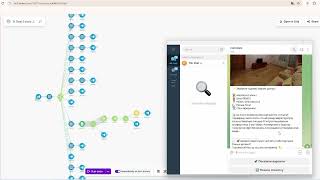
Проект AI-агентство недвижимости по подбору объектов — это сервис, который использует искусственный интеллект для быстрого и точного подбора недвижимости под запрос клиента. Система анализирует потребности, бюджет, локацию и другие критерии, автоматически отбирает лучшие варианты с рынка, фильтрует нерелевантные предложения и помогает принять оптимальное решение. Это позволяет значительно сэкономить время, избежать лишних просмотров и получить максимально релевантные объекты без ручного поиска.
-
250 UAH 100%
AI и машинное обучениеПеревод текста с русского языка на украинский
-
AI-фотосессия:
AI и машинное обучение
AI-визуал в стиле “люксовый образ жизни” с акцентом на продукт и премиальную подачу. Создано для рекламных креативов и контента в соцсетях (пост/сторис).
Инструменты: Nanobanana / ChatGPT
-
4000 UAH Автоматизация "Task manager" (Make.com)
AI и машинное обучение
Команда фрилансеров (SMM, дизайнер, таргетолог) работает с несколькими брендами одновременно. Из-за ограниченного бюджета команда не использовала платные таск-менеджеры (Trello, ClickUp, Asana) и координировала работу только в Telegram-чате.
Проблема:
Обсуждение задач в чате приводило к путанице, потере важных сообщений, нарушению дедлайнов и несогласованности между исполнителями. Некоторые задачи дублировались, а часть просто забывалась из-за отсутствия централизованного контроля.
…
Решение: Создана система управления задачами на базе Google Sheets и Make
- Team Lead добавляет задачи в Google Таблицу, указывает ответственного, статус и дедлайн;
- Автоматизация в Make проверяет появление новых записей;
- Для каждого специалиста создается отдельная вкладка с его текущими задачами;
- Make автоматически отправляет индивидуальные сообщения в Telegram каждому члену команды — с перечнем новых или обновленных задач, дедлайном и дополнительными комментариями.
Результат:
- Полный отказ от платных таск-менеджеров → экономия бюджета $20–30/мес;
- Снижение количества просроченных задач более чем на 50%;
- Коммуникация в Telegram стала четкой, без потерянных сообщений;
- SMM Team Lead получил полный контроль за выполнением без дополнительных инструментов;
- Благодаря структуризации процессов команда смогла параллельно вести на 2 проекта больше, не увеличивая количество людей.
Эффект от автоматизации:
- Экономия времени: до 4 часов в неделю у каждого специалиста;
- Рост продуктивности команды примерно на 25–30%;
- Повышение качества выполнения и предсказуемости дедлайнов;
Ощутимое снижение нагрузки на менеджера благодаря прозрачному контролю задач.
-
AI-сценарист для коротких видео (Shorts / Reels / TikTok)
AI и машинное обучение
Я создала AI-систему, которая автоматически готовит сценарии для коротких видео. Пользователь отправляет идею или текст — система преобразует его в готовую структуру из 5 сцен для видео-продакшена.
Как это работает:
AI анализирует входной текст и логически разбивает его на сцены (начало, развитие, финал);
… фиксирует персонажа и стиль, чтобы они оставались одинаковыми во всех сценах;
для каждой сцены генерирует:
профессиональный AI-промпт,
инструкции для анимации,
текст для диктора;
поддерживает правки через диалог (например, изменить стиль или атмосферу).
Результат для пользователя:
быстрая подготовка сценариев без ручной работы;
стабильная структура и консистентность персонажей;
экономия до 80% времени на пре-продакшн;
готовая база для генерации видео в AI-инструментах.
Инструменты: n8n, Claude 4.5 Sonnet, память контекста, advanced prompt engineering.


-
96AI и машинное обучение
-
5AR и VR разработка
-
63C и C++
-
84C#
-
264CMS
-
3230HTML и CSS верстка
-
27Java
-
293Javascript и Typescript
-
485PHP
-
224Python
-
69Базы данных и SQL
-
2451Веб-программирование
-
44Встраиваемые системы и микроконтроллеры
-
121Десктопные приложения
-
95Криптовалюта и blockchain
-
177Парсинг данных
-
235Разработка ботов
-
154Разработка игр
-
82Тестирование и QA

-
34763D моделирование и визуализация
-
360AI в дизайне
-
6VR и AR дизайн
-
7227Баннеры
-
4044Векторная графика
-
2053Дизайн визиток
-
209Дизайн выставочных стендов
-
964Дизайн интерфейсов (UI/UX)
-
6057Дизайн интерьеров
-
886Дизайн мобильных приложений
-
56Дизайн одежды
-
10513Дизайн сайтов
-
4148Дизайн упаковки и этикетки
-
2280Живопись и графика
-
575Иконки и пиксельная графика
-
11672Иллюстрации и рисунки
-
642Инфографика
-
13732Логотипы
-
1538Наружная реклама
-
2088Оформление страниц в социальных сетях
-
9183Полиграфический дизайн
-
398Предметный дизайн
-
1004Разработка презентаций
-
43Разработка шрифтов
-
2010Фирменный стиль

-
73Автоматизация управления предприятием
-
10Интеграция платежных систем
-
666Интернет-магазины и электронная коммерция
-
20Кибербезопасность и защита данных
-
10Консультирование по AI
-
1224Контент-менеджер
-
55Обработка данных
-
93Обучение
-
101Поиск и сбор информации
-
38Работа с клиентами
-
4996Создание сайта под ключ
-
168Сопровождение сайтов


-
250E-mail маркетинг
-
1PR
-
343SEO-аудит сайтов
-
977Контекстная реклама
-
52Маркетинговые исследования
-
1191Поисковое продвижение (SEO)
-
34Поисковое управление репутацией (SERM)
-
38Покупка ссылок
-
220Продажи и генерация лидов
-
838Продвижение в социальных сетях (SMM)
-
12Продвижение приложений (ASO)
-
651Реклама в социальных медиа
-
6Тизерная реклама


